Noticing blurry vision, glare while driving at night, or difficulty reading can be worrying. If you have been diagnosed with cataracts, you may be searching for cataract eye drops that can improve your vision without surgery.
The good news is that certain eye drops can help with other eye problems, such as dryness and irritation. However, no eye drops have been proven to remove an already existing cataract or reverse the clouding of the natural lens. Knowing what works and what doesn’t can help you make informed decisions about your eye health.
In this complete guide, AG Vision explains the different types of eye drops, their uses, tips for cataract prevention, and when an eye specialist may recommend surgery.
What Are Cataract Eye Drops?
Cataract eye drops are topical ophthalmic solutions used before or after cataract surgery, or to manage symptoms in early-stage lens changes. While some commercial products claim to slow or reverse lens clouding, none are clinically validated for that purpose.
There are several distinct categories of eye drops that patients and caregivers encounter when researching cataracts:
- Pre-operative drops — antibiotic and anti-inflammatory drops prescribed before cataract surgery to reduce infection risk
- Post-operative drops — antibiotic, steroid, and NSAID drops prescribed after phacoemulsification to support healing and prevent inflammation
- Symptomatic relief drops — lubricating or anti-glare drops that do not treat the cataract but reduce discomfort from dry eyes and light sensitivity associated with early lens changes
- Investigational or commercial drops — products containing NAC (N-acetylcarnosine), lanosterol, antioxidants, or other compounds marketed for cataract prevention or treatment
Do Cataract Eye Drops Actually Work? Myth vs Reality
The clinical reality in 2026: No eye drop currently approved or validated by any major regulatory body — CDSCO, FDA, or EMA — can reverse, dissolve, or meaningfully treat an established cataract.
| Compound | Research Status | Clinical Verdict |
| N-acetylcarnosine (NAC) drops | Small studies — modest slowing of early cortical opacity in some trials | No large-scale RCT validates efficacy in humans |
| Lanosterol | Promising lens clarity in rabbit models (Nature, 2015) | Human trials have not confirmed clinical benefit |
| Antioxidant drops (Vitamin C, Vitamin E) | Reduce oxidative stress on the ocular surface | Cannot reach the lens in therapeutically effective concentrations |
| Any approved eye drop | No regulatory approval exists for cataract reversal | No validated treatment — surgery remains the only proven option |
Why eye drops cannot reach the cataract: The crystalline lens sits behind the iris, separated from the eye’s surface by the cornea, aqueous humour, and anterior chamber. Topical drops cannot penetrate this barrier in concentrations sufficient to affect the protein aggregation causing lens opacity — and even if they could, the oxidative cross-linking of crystallin proteins is a structural change no topical agent has reversed in human trials.
Bottom line: Eye drops can support eye health, relieve symptoms, and potentially slow very early progression — they cannot cure or reverse an established cataract.
What Are Cataract Eye Drops Used For?
While cataract eye drops cannot treat the lens opacity itself, they serve important and crucial clinical roles:
Before cataract surgery:
- Antibiotic drops — prescribed 1-3 days before phacoemulsification to sterilise the ocular surface and prevent endophthalmitis
- Dilating drops — to widen the pupil before surgery for surgical access
- NSAID drops — to reduce pre-operative inflammation and maintain pupil dilation during surgery
After cataract surgery:
- Antibiotic drops — continued for 1-4 weeks post-operatively to prevent infection
- Steroid drops — reduce post-surgical inflammation
- NSAID drops — prevent cystoid macular oedema, the most common post-surgical complication affecting vision quality
For symptom management in early cataracts:
- Lubricating drops — reduce dry eye and ocular surface irritation that frequently accompanies early cataract
- Anti-glare glasses combined with lubricating drops — improve functional vision in patients not yet requiring surgery
What Are the Best Eye Drops for Cataracts?
Since no drops treat cataracts, the “best” eye drops are those used for legitimate, evidence-based purposes:
Best Pre- and Post-Operative Cataract Eye Drops
| Drop Type | Common Examples | Purpose |
| Antibiotic | Moxifloxacin, Chloramphenicol, Ofloxacin | Infection prevention |
| Steroid | Prednisolone, Dexamethasone | Post-op inflammation control |
| NSAID | Nepafenac, Ketorolac, Bromfenac | CMO prevention |
| Dilating | Tropicamide, Phenylephrine | Pre-op pupil dilation |
| Lubricant | Carboxymethylcellulose, Hydroxypropyl | Dry eye symptom relief |
Eye Drops for Symptom Management in Early Cataract
- Carboxymethylcellulose (CMC) drops — for dry eye symptoms accompanying early cataract
- Hydroxypropyl methylcellulose — for ocular surface lubrication reducing light scatter sensation
- NAC drops (N-acetylcarnosine) — not clinically validated but widely commercially available; some patients report subjective comfort improvement
Can Cataract Eye Drops Dissolve or Reverse Cataracts?
No — and this must be stated clearly because the answer carries real consequences for patients.
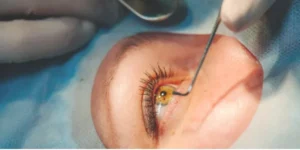
A cataract is a physical, structural opacity of the crystalline lens proteins — a change that is irreversible through topical treatment. The only proven, validated treatment that removes a cataract and restores clear vision is phacoemulsification surgery — a 10-20 minute, highly safe procedure in which the opacified lens is removed and replaced with a clear artificial intraocular lens (IOL).
The danger of relying on unproven drops: Patients who use commercially available “cataract eye drops” hoping to avoid surgery may:
- Allow the cataract to progress from the immature to the mature stage — increasing surgical complexity and complication risk
- Delay treatment for co-existing conditions like diabetic retinopathy that require a clear lens to monitor
- Waste financial resources on unvalidated products
- Experience preventable vision loss that could have been avoided with timely surgery
Are There Any Side Effects of Cataract Eye Drops?
Side effects vary by the type of drop:
Post-operative drops — common side effects:
- Temporary stinging or burning on instillation — most common with antibiotic drops
- Mild blurring immediately after instillation
- Raised intraocular pressure with prolonged steroid use — requires monitoring
- Allergic reaction to preservatives — use preservative-free formulations if this occurs
NAC and commercial “cataract treatment” drops:
- Generally low direct toxicity — the primary risk is not the drop itself but the delayed surgery resulting from misplaced confidence in the product
- Some commercial products contain unlisted compounds — quality control is inconsistent
Important safety note: Never use any eye drop not prescribed or recommended by a qualified ophthalmologist. Self-medicating with commercially available “cataract drops” without specialist assessment delays the diagnosis and treatment of conditions that require prompt management.
Cataract Prevention Tips That Actually Work
While no eye drop prevents cataracts definitively, these evidence-based strategies genuinely slow progression:
- Consistent UV400 sunglasses use — the most effective environmental intervention; UV-B is directly linked to cortical cataract formation
- Strict blood sugar control — HbA1c management is the most crucial modifiable risk factor for diabetic cataract delay
- Stop smoking — smoking doubles to triples cataract risk through systemic oxidative burden
- Antioxidant-rich diet — Vitamin C (citrus, amla), lutein and zeaxanthin (leafy greens), Vitamin E (nuts, seeds)
- Annual eye examinations from age 50 — or earlier for diabetic, steroid-using, or high-risk patients
- Avoid unsupervised steroid eye drops — a leading cause of posterior subcapsular cataracts
When Eye Drops Are Not Enough — Signs Surgery Is Required
Seek cataract surgery assessment when:
- Vision is blurred and no longer correctable with updated glasses
- Glare from headlights or sunlight is significantly affecting safety or daily function
- Near vision is impaired despite adequate glasses — particularly in posterior subcapsular cataracts
- You have required more than one new glasses prescription in 12 months
- Colour perception is noticeably faded or yellowish
- The cataract is approaching maturity — verified by your ophthalmologist on examination
How Is Cataract Treated When Eye Drops Cannot Help?
Advanced cataract surgery — phacoemulsification — is the only validated cataract treatment:
- Procedure: A micro-incision of 2.2- 3.0 mm, ultrasound emulsification of the clouded lens, and implantation of a clear foldable IOL
- Duration: 10-20 minutes per eye
- Anaesthesia: Topical drops — no injections in standard cases
- Recovery: Vision improvement typically within 24-48 hours
- IOL options: Monofocal, toric, multifocal, trifocal, and EDOF lenses available based on patient visual goals
- Complication rate: Under 1% in experienced surgical hands
Surgery is not the last resort — it is the first effective treatment. And when performed in the immature cataract stage, it is the safest, technically simplest, and most visually rewarding option.
When Should You See an Eye Specialist for Cataracts?
See an ophthalmologist promptly when:
- You notice blurring, glare, or colour fading that is affecting everyday life
- A family member notices a white or cloudy pupil appearance
- You have diabetes and have not had a dilated eye examination in the past 12 months
- You are over 50 and have not had an eye examination in more than 2 years
Do not wait for vision to deteriorate severely before seeking assessment. Early evaluation means optimal surgical timing — and optimal surgical timing means the best visual outcomes.
Frequently Asked Questions
1. Which eye drops are best for cataracts?
No eye drop treats cataracts. The best options are those prescribed for legitimate purposes — antibiotic and steroid drops for pre- and post-surgical care, and lubricating drops for dry eye relief. Commercially marketed drops (NAC, lanosterol) are not validated by clinical trials for reversing lens opacity.
2. Can eye drops treat cataracts?
No — the crystalline lens sits too deep within the eye for topical drops to reach it in effective concentrations. Phacoemulsification surgery, removing the opacified lens and replacing it with a clear IOL, is the only proven treatment.
3. What is the best non-surgical treatment for cataracts?
No non-surgical treatment reverses cataracts. Updated glasses, anti-glare coatings, and better lighting can manage early symptoms. Antioxidant nutrition, UV protection, blood sugar control, and smoking cessation can slow progression — but none remove an existing cataract.
4. What is the newest cataract treatment in 2026?
The most advanced option is femtosecond laser-assisted cataract surgery (FLACS) combined with premium IOLs — including Light Adjustable Lenses and non-diffractive EDOF lenses. Research into lanosterol continues but has not produced a clinically validated non-surgical alternative.
5. What should I eat to help prevent cataracts?
Leafy greens (lutein, zeaxanthin), citrus and amla (Vitamin C), almonds and seeds (Vitamin E), and omega-3-rich fish all support the lens’s antioxidant defences. These nutrients slow progression — they cannot reverse established lens opacity.
6. Can eye drops prevent cataracts from getting worse?
Possibly, at very early stages — NAC and antioxidant drops have shown modest slowing in small studies. Evidence is insufficient to recommend them as a validated strategy. UV protection, blood sugar control, and a good diet remain better-evidenced prevention measures.
7. How long can you use cataract eye drops?
Post-operative antibiotic and steroid drops are used for 4-6 weeks after surgery. Lubricating drops can be used long-term as needed. Commercial “cataract treatment” drops have no established dosing protocol — always consult an ophthalmologist before starting them.
8. Can you reverse cataracts without surgery?
No — once lens proteins have aggregated and produced opacity, the change is permanent and progressive. No drop, supplement, laser, or natural remedy has been clinically proven to restore lens transparency without surgical removal and IOL implantation.
9. What helps stop cataracts from progressing?
Consistent UV400 sunglasses, strict blood sugar control in diabetic patients, smoking cessation, an antioxidant-rich diet, and avoiding unnecessary steroid use all slow progression meaningfully. Annual eye examinations allow timely monitoring of the rate of change.
10. What can actually remove cataracts from the eye?
Only phacoemulsification surgery removes cataracts — emulsifying the opacified lens through a 2.2- 3.0 mm micro-incision and replacing it with a clear IOL. The procedure takes 10-20 minutes, requires no stitches in most cases, and vision improvement typically begins within 24-48 hours.
Conclusion
Cataract eye drops are widely marketed but narrowly effective — useful for pre- and post-operative care and symptomatic relief, but definitively incapable of treating, reversing, or dissolving an established cataract. The most crucial message for anyone experiencing cataract symptoms is this: do not delay a specialist assessment in the hope that an eye drop will resolve the problem. Phacoemulsification surgery, performed at the right time by an experienced ophthalmologist, delivers vision restoration that no eye drop can replicate.
Dr. Arushi Garg — one of the most trusted eye doctors in Noida — provides comprehensive cataract assessment, honest counselling on surgical vs. non-surgical options, and advanced phacoemulsification surgery with premium IOL selection at AG Vision & CoDE Centre, Sector 70, Noida.