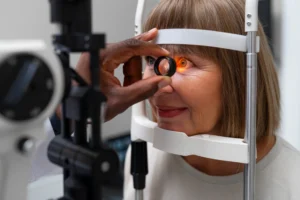

An immature cataract is a stage of cataract development in which only part of the eye’s natural lens has become cloudy, while some of the lens remains transparent. Because the lens is not completely opaque, some vision is usually preserved, although it may become blurred, hazy, or less clear.
An immature cataract can develop gradually and may initially cause only minor changes in vision. Over time, increasing lens clouding can affect reading, driving, recognizing faces, seeing at night, or performing other everyday activities.
Understanding the symptoms, causes, stages, and treatment options can help you know when an eye examination is needed and when cataract surgery may be considered.
What Is an Immature Cataract?
An immature cataract is a partially cloudy natural lens, where some areas have become opaque while other parts remain clear. This partial clouding distinguishes it from a mature cataract, in which the lens becomes completely or almost completely opaque.
The natural lens sits behind the pupil and focuses light onto the retina. As lens proteins change with age, UV exposure, certain diseases, or other risk factors, cloudy areas can develop and gradually affect vision.
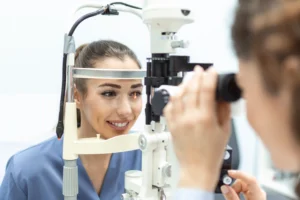
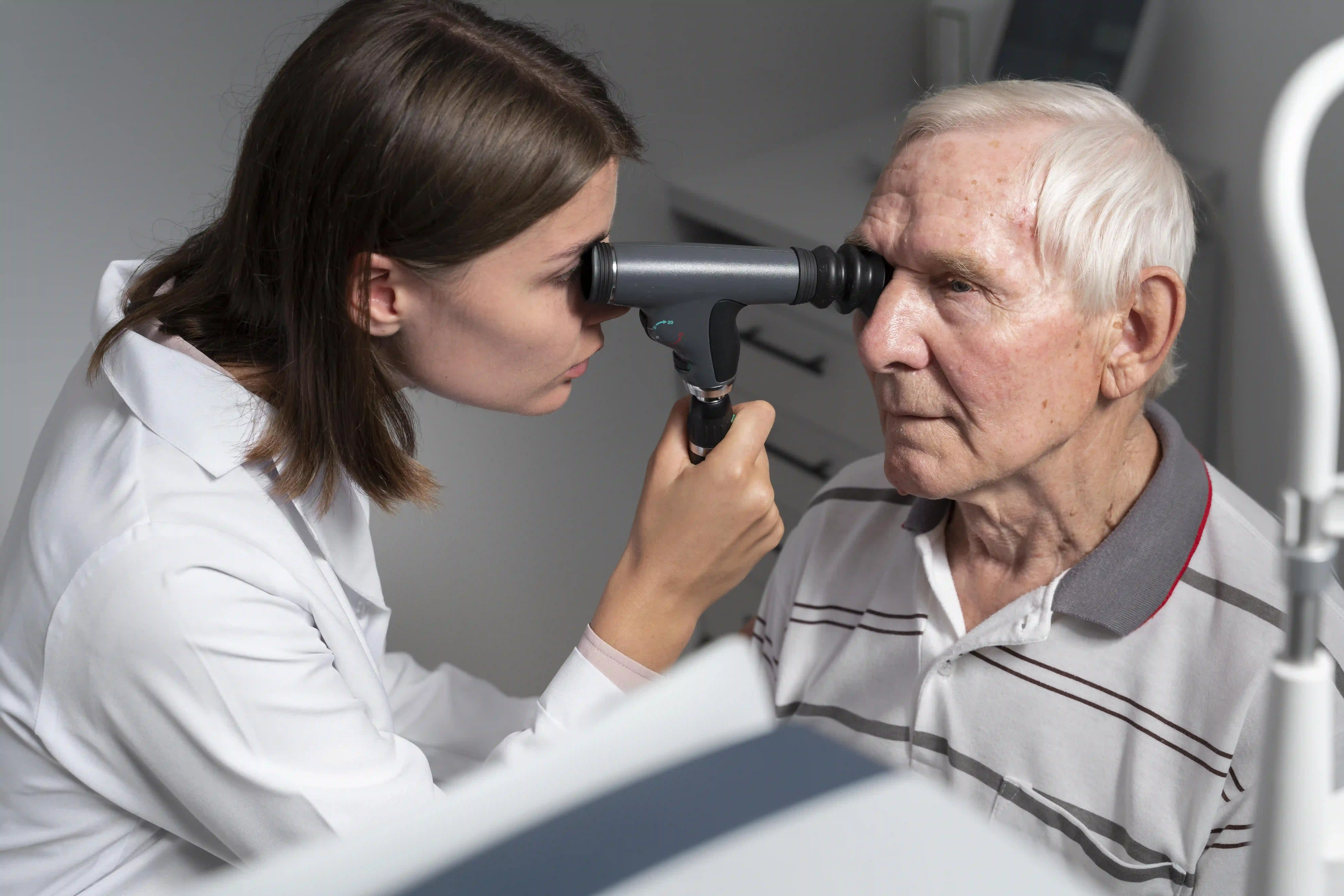
An immature cataract can be identified during a slit-lamp eye examination, where the ophthalmologist can assess the location and extent of lens clouding.
5 Major Causes of Immature Cataract
Understanding why an immature cataract develops helps patients identify their modifiable risk factors and make informed decisions about managing progression:
Cause 1 — Age-Related Lens Protein Degeneration
The most common cause of immature cataract is ageing. From the fifth decade onward, structural proteins (crystallins) undergo progressive oxidative damage and aggregation — gradually reducing lens transparency.
- Affects the nucleus, cortex, or posterior subcapsule — each producing a distinct opacity pattern
- Protein cross-linking reduces the lens’s ability to maintain optical clarity over time
- Most age-related immature cataracts progress slowly over 5-15 years
Cause 2 — Diabetes Mellitus and Metabolic Disorders
Chronically elevated blood glucose drives sorbitol accumulation and osmotic stress within the lens — directly accelerating protein damage and opacity formation in diabetic patients.
- Diabetic patients develop immature cataracts 10-15 years earlier than non-diabetic individuals
- Posterior subcapsular cataract is the most common type in uncontrolled diabetes
- Poor HbA1c control measurably accelerates immature cataract progression
Cause 3 — Prolonged Ultraviolet Radiation Exposure
UV-B radiation from sunlight directly affects the lens proteins through photooxidative reactions — a cumulative process building over decades of sun exposure.
- Greatest risk in outdoor workers, high-altitude residents, and those in low-latitude regions
- Primarily drives cortical and nuclear immature cataract development
- UV400 sunglasses significantly reduce cumulative lens UV exposure
Cause 4 — Steroid Medication Use
Long-term corticosteroid use — whether systemic or topical — causes posterior subcapsular cataract, developing on the back surface of the lens where it sits directly in the central light path.
- Risk is dose-dependent and duration-dependent
- Even topical steroid eye drops carry cataract risk with prolonged unsupervised use
- Patients on long-term steroids should have annual eye examinations
Cause 5 — Nutritional Deficiencies and Lifestyle Factors
Deficiencies in Vitamin C, Vitamin E, lutein, and zeaxanthin — the lens’s natural antioxidant defences — accelerate the oxidative damage driving immature cataract formation.
- Smoking doubles to triples immature cataract risk through systemic oxidative burden
- Chronic alcohol consumption depletes lens-protective antioxidants
- These are the most preventable contributing causes of immature cataract
Symptoms of Immature Cataract
Immature cataract symptoms develop gradually — often so slowly that patients adapt before seeking evaluation. Recognising these patterns enables timely diagnosis:
Visual symptoms:
- Progressive blurring — a gradual reduction in visual clarity not correctable by updated glasses, particularly noticeable when reading fine print or recognising faces at a distance
- Increased glare sensitivity — difficulty with oncoming headlights at night and bright sunlight outdoors; particularly characteristic of posterior subcapsular immature cataracts
- Fading colour perception — colours appear washed out or yellowish; blues and purples are affected most noticeably in nuclear immature cataracts
- Monocular diplopia — double or ghost images in the affected eye when tested alone
- Halos around lights — rings of scattered light around streetlights or car headlights at night
Functional indicators:
- Difficulty with night driving that was not present previously
- Need for increasingly bright lighting for reading
- Frequent glasses prescription changes — the myopic shift in nuclear immature cataracts
causes a temporary improvement in near vision (“second sight”) followed by progressive decline - Difficulty with high-contrast activities — reading a menu in a dimly lit restaurant, watching screens in low light
How Immature Cataract Affects Vision
The visual impact of an immature cataract depends significantly on where within the lens the opacity is located:
Nuclear immature cataract: Affects the central lens core — initially produces a myopic shift that may temporarily improve near vision before causing progressive blurring of both distance and near tasks. Patients often need more frequent prescription updates in this phase.
Cortical immature cataract: Spoke-like opacities in the lens periphery — produce glare and scattered light, particularly at night. Vision may remain relatively preserved in non-glare conditions until the opacity extends centrally.
Posterior subcapsular immature cataract: Even small opacities on the back surface of the lens can cause disproportionate visual disruption — near vision is often more affected than distance, and glare is severe because the opacity sits directly in the path of light entering the pupil.
Stages of Immature Cataract and Cataract Progression
Understanding how immature cataract fits within the complete cataract progression helps patients understand what to expect and when to act:
| Stage | Description | Visual Impact | Clinical Signs |
| Incipient (earliest) | Minimal peripheral opacity; clear central lens | Very mild or unnoticed | Subtle cortical changes on slit lamp |
| Immature | Partial opacity with clear zones remaining | Moderate — blurring, glare, colour changes | Partial opacification; cortex still visible on retro-illumination |
| Mature | Complete lens opacity — no clear zones | Significant — light perception only | Uniform white opacity; no fundal red reflex |
| Hypermature | Lens liquefaction; capsular wrinkling | Severe | Shrunken, leaking lens; risk of complications |
| Morgagnian | Nucleus sinks in liquefied cortex | Complete visual loss | Emergency surgical complexity |
The critical implication: Surgery in the immature stage is the safest, technically simplest, and most visually rewarding. Waiting beyond this stage — particularly to mature or hypermature — increases surgical complexity, complication risk, and reduces the likelihood of optimal visual outcomes.
Immature vs Mature Cataract — Key Differences
| Feature | Immature Cataract | Mature Cataract |
| Lens transparency | Partial — clear zones remain | Complete opacity — no clear zones |
| Visual acuity | Reduced but functional | Severely impaired to light perception |
| Fundal red reflex | Present (reduced) | Absent |
| Surgical difficulty | Moderate | Significantly higher |
| Surgical urgency | Elective — timed to patient need | Urgent — to prevent complications |
| Risk of complications | Low | Higher — secondary glaucoma, uveitis |
| Best corrected vision (post-op) | Usually excellent | Good, but potentially limited |
| Patient symptoms | Noticeable but manageable | Severely limiting |
When to Consider Surgery for an Immature Cataract
This is the most common clinical question for patients diagnosed with an immature cataract. The decision to proceed with surgery is based on functional impact — not the appearance of the cataract on imaging.
Surgery for immature cataract is appropriate when:
- Best corrected visual acuity (BCVA) has fallen below 6/18 in the affected eye
- Glare is significantly affecting night driving safety
- Difficulty reading, performing occupational tasks, or everyday activities is measurable
- The patient is dissatisfied with their visual quality despite updated glasses
- The immature cataract is causing secondary problems — elevated intraocular pressure or lens-related inflammation
Surgery can reasonably be deferred when:
- Visual acuity remains above 6/9 with updated glasses
- Glare and blurring are mild and not limiting daily function
- The patient is elderly with multiple medical comorbidities — risk-benefit assessment should be individualised
The key principle: it is never advisable to wait until the cataract is mature. Operating on an immature cataract consistently produces better outcomes, faster surgery, and lower complication rates than waiting.
Treatment of Immature Cataract
Non-Surgical Management
In the early stages of immature cataract, when vision remains functional, non-surgical management focuses on maximising remaining visual quality while monitoring progression:
- Updated spectacle prescription — as the myopic shift develops in nuclear immature cataracts
- Anti-glare coated lenses — for improved driving and outdoor comfort
- UV400 sunglasses — to slow further UV-driven progression
- Nutritional antioxidant support — Vitamin C, lutein, zeaxanthin supplementation where dietary intake is inadequate
- Blood sugar optimisation — for diabetic patients, where poor control measurably accelerates progression
- Avoiding unnecessary steroid use — particularly unsupervised topical steroids
Important: No medication, eye drop, or supplement can reverse established immature cataract opacity. These measures slow progression — they do not cure the existing opacity.
Surgical Treatment — Phacoemulsification
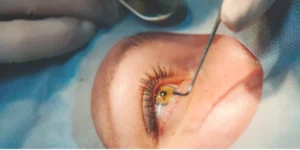
Advanced immature cataract surgery uses phacoemulsification — ultrasound energy through a micro-incision of 2.2- 3.0 mm — to emulsify and aspirate the partially clouded lens, replacing it with a clear foldable intraocular lens (IOL).
Why immature cataracts are ideal for phacoemulsification:
- The lens nucleus is softer than in mature cataracts — requiring less ultrasound energy, which means less corneal endothelial stress
- Clear lens zones make the capsulorrhexis (circular opening in the anterior capsule) technically easier and more accurate
- Lower complication rates in experienced hands compared to mature cataract surgery
IOL options for immature cataract patients:
| IOL Type | Best For |
| Monofocal IOL | Clear distance or near vision; highest reliability |
| Toric IOL | Distance correction with astigmatism management |
| Multifocal / Trifocal IOL | Spectacle independence for distance, intermediate, and near |
| EDOF IOL | Extended range with reduced glare vs standard multifocal |
FLACS (Femtosecond Laser-Assisted Cataract Surgery): For patients choosing premium multifocal or trifocal IOLs, FLACS provides sub-millimetre capsulotomy precision that directly improves IOL centration and optical performance — a meaningful advantage over manual phacoemulsification in premium IOL cases.
What Happens If an Immature Cataract Is Left Untreated?
Leaving an immature cataract untreated does not make the cataract go away — it progressively worsens toward maturity, with specific clinical consequences:
- Progressive visual loss — uncorrectable by glasses, progressively limiting daily function, work, and independence
- Risk of phacomorphic glaucoma — the swelling lens in a late immature or maturing cataract can block the drainage angle, causing sudden elevation of intraocular pressure and acute glaucoma — a painful emergency
- Phacolytic uveitis — protein leakage from a hypermature cataract causes severe intraocular inflammation
- Increased surgical complexity — a mature or hypermature cataract requires more phacoemulsification energy, carries higher posterior capsule rupture risk, and produces less predictable visual outcomes
- Loss of independence — inability to drive, read, or recognise faces meaningfully affects quality of life and mental health in older patients
How to Prevent Immature Cataracts and Slow Progression
While age-related lens changes cannot be entirely prevented, these evidence-based strategies meaningfully delay the onset and slow the progression of immature cataracts:
- Consistent UV400 sunglasses — the most effective single environmental intervention
- Blood sugar control — for diabetic patients, well-controlled HbA1c consistently delays immature cataract onset
- Stop smoking — smoking cessation reduces the systemic oxidative burden on the lens from the first month
- Antioxidant-rich diet — leafy greens (lutein, zeaxanthin), citrus fruits (Vitamin C), nuts and seeds (Vitamin E)
- Avoid unsupervised steroid eye drops — topical steroids should only be used under ophthalmological supervision
- Annual eye examinations from age 50 — or earlier if risk factors are present, so progression is monitored, and surgery is timed optimally
Frequently Asked Questions
1. Can an immature cataract be removed surgically?
Yes — phacoemulsification is the standard treatment and is technically easier on an immature cataract than a mature one. The softer lens nucleus and clearer capsule result in lower complication rates and better outcomes. Surgery is recommended when the cataract causes functional visual impairment.
2. How do you differentiate an immature from a mature cataract?
An immature cataract has partial opacity with clear zones remaining — the fundal red reflex is still visible. A mature cataract is uniformly opaque, the lens appears completely white, and no red reflex is detectable. Mature cataracts cause far more severe visual impairment and significantly higher surgical risk.
3. Can an immature cataract be reversed naturally?
No — established lens opacity cannot be reversed by any medication or supplement. Non-surgical management only slows further progression. Phacoemulsification with IOL implantation is the only effective treatment for an immature cataract causing meaningful visual impairment.
4. What is the minimum age for cataract surgery?
There is no minimum age — surgery is performed whenever clinically indicated. Congenital cataracts in newborns require surgery within weeks. Age-related immature cataracts are most commonly operated on between 55 and 75 years, though younger patients with diabetic or steroid-related cataracts may need earlier intervention.
5. What is the newest treatment for immature cataracts in 2026?
The latest option is FLACS — femtosecond laser-assisted cataract surgery — offering sub-millimetre precision for incision and capsulotomy, combined with Light Adjustable Lenses for post-surgical refractive fine-tuning. Non-diffractive EDOF IOLs in 2026 also provide a wider visual range with significantly reduced glare compared to older multifocal designs.
Conclusion
An immature cataract is not a condition to wait on — it is a stage to monitor carefully and act on at the right time. The best visual outcomes from cataract surgery consistently come from operating during the immature stage, when the lens is partially opacified, surgery is technically straightforward, and the eye’s structures are in their best condition to support recovery.
Delaying surgery until the cataract matures — out of reluctance, unawareness, or hoping it will resolve on its own — increases risk, reduces outcomes, and allows unnecessary vision loss to continue affecting daily life.
Dr. Arushi Garg — one of the most trusted eye doctors in Noida — provides comprehensive immature cataract evaluation, personalised monitoring plans, and advanced phacoemulsification surgery with the full range of premium IOL options at AG Vision & CoDE Centre. Her fellowship-trained expertise in corneal and refractive surgery ensures every cataract patient receives the most appropriate, precisely timed intervention.