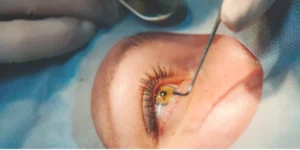

Blurred vision, glare from headlights, difficulty in reading, and cloudy eyesight can gradually make daily life more challenging. For many people with cataracts, Phaco Eye Surgery is one of the most commonly used procedures to remove the cloudy natural lens and restore clearer vision.
Phaco Eye Surgery, also known as phacoemulsification, uses ultrasound technology to break the cataract into small pieces before removing it and replacing it with an artificial intraocular lens (IOL).
This complete guide explains everything patients need to know about Phaco Eye Surgery—including who may need it, how the procedure works, its benefits, recovery, possible risks, complications, and the cost of treatment in India.
What Is Phaco Eye Surgery?
Phaco eye surgery — short for phacoemulsification — is a minimally invasive surgical procedure used to remove a cataract from the eye. A cataract is the clouding of the eye’s natural lens, which sits behind the pupil and is responsible for focusing light onto the retina to produce clear vision.
In phaco surgery, a tiny ultrasonic probe is inserted through a micro-incision — typically just 2.2 to 2.8mm — to break the cloudy lens into small fragments using high-frequency sound waves. These fragments are then gently suctioned out of the eye, and a clear artificial lens — called an intraocular lens (IOL) — is implanted in the same position to restore sharp, clear vision.
The micro-incision used in phaco surgery is so small that it is largely self-sealing — typically requiring no stitches and healing very quickly. This is what makes phacoemulsification significantly faster and safer than older cataract surgical techniques.
Who Needs Phaco Eye Surgery?
Phaco eye surgery is recommended when a cataract has progressed to the point where it significantly affects your everyday life — and glasses or contact lenses can no longer provide satisfactory vision.
You may need phaco surgery if you experience:
- Blurred or hazy vision that does not improve with your glasses prescription
- Increasing difficulty reading, driving, or watching television
- Sensitivity to bright lights or glare — particularly car headlights at night
- Colours appearing faded, yellowed, or less vibrant than before
- Frequent changes to your glasses prescription without sustained improvement
- Double vision in the affected eye
There is no fixed timeline for when cataract surgery becomes necessary — it depends on how significantly your cataract is affecting your vision and quality of life.
Phaco Eye Surgery — Step-by-Step Procedure
Understanding what happens during the procedure helps reduce anxiety and sets realistic expectations.
Before Surgery — Preparation
- Pre-operative assessment: Your ophthalmologist performs biometry measurements — accurate calculations of your eye’s length and corneal curvature — to select the correct IOL power for your eye
- Eye drops: Dilating drops are applied 30–45 minutes before surgery to widen the pupil for better surgical access
- Anaesthesia: Phaco surgery is performed under topical anaesthesia — numbing eye drops — with no injections around the eye in most cases. The patient remains awake but completely comfortable
Step 1 — Micro-Incision
A tiny incision of 2.2–2.8mm is made at the edge of the cornea. This micro-incision is self-sealing and does not require stitches in the vast majority of cases.
Step 2 — Capsulorrhexis
A circular opening is created in the front of the lens capsule — the thin membrane that holds the natural lens in place. This opening provides access to the cloudy lens inside.
Step 3 — Phacoemulsification (Lens Breaking)
A small ultrasonic probe is inserted through the micro-incision. High-frequency sound waves emulsify (break into tiny fragments) the hard, cloudy lens material. The fragments are simultaneously suctioned out of the eye through the same probe.
Step 4 — IOL Implantation
Once the cloudy lens is fully removed, the lens capsule remains intact and acts as a natural pocket. A folded intraocular lens (IOL) is inserted through the same micro-incision and gently unfolds into its correct position inside the capsule.
Step 5 — Wound Sealing
The micro-incision self-seals due to the eye’s natural fluid pressure. No sutures are typically required. A protective eye shield is placed, and the patient is ready to go home within 1–2 hours of arriving.
Total surgical time: 10–20 minutes per eye in experienced hands.
Benefits of Phaco Eye Surgery
Phacoemulsification has become the global gold standard for cataract surgery for very good reasons. The benefits over older techniques are substantial:
- Micro-incision — no stitches required in the vast majority of patients, reducing healing time and the risk of suture-related complications
- Faster visual recovery — most patients notice dramatically improved vision within 24–48 hours of surgery
- Less post-operative discomfort — the smaller wound causes significantly less irritation and inflammation than conventional large-incision cataract surgery
- Lower risk of infection and complication — the smaller incision size is directly associated with reduced risk of post-operative endophthalmitis
- Day-care procedure — patients go home the same day; no hospital admission required
- Wide IOL choice — phaco surgery accommodates the full range of intraocular lens
options, including premium multifocal, toric, and extended depth of focus (EDOF) lenses - Excellent predictability — advanced phaco equipment combined with pre-operative biometry produces highly accurate refractive outcomes
Recovery After Phaco Eye Surgery
Recovery from phaco surgery is typically fast and well-tolerated. Most patients are genuinely surprised by how quickly their vision improves.
First 24 Hours
- Mild watering, redness, and light sensitivity are completely normal
- A protective eye shield is worn — particularly during sleep — to prevent accidental rubbing
- Most patients notice improved vision the morning after surgery, even through mild post-operative haziness
Week 1
- Antibiotic and anti-inflammatory eye drops are used as prescribed — typically four times daily
- Avoid rubbing, pressing, or touching the operated eye
- Avoid swimming, dusty environments, and activities that might splash water in the eye
- Normal activities — including reading and watching television — can typically resume within 1–2 days
Week 2–4
- Vision continues to stabilise as the eye heals
- Most patients can drive within 1–2 weeks, subject to their surgeon’s specific guidance
- Eye drops are usually continued for 4 weeks, tapering toward the end of the course
Month 1–3
- Final glasses prescription is assessed at approximately 4–6 weeks after surgery, once the eye has fully stabilised
- Regular follow-up appointments allow your surgeon to monitor healing and detect any early complications promptly
What Should You Avoid After Phaco Eye Surgery?
Protecting the eye during the healing period is important for the best possible outcome.
Avoid these activities after phaco surgery:
- Rubbing or pressing the eye — even gently — for at least 2–4 weeks
- Swimming and water sports — avoid for a minimum of 4 weeks
- Dusty, smoky, or polluted environments — irritants can increase infection risk
- Heavy lifting and intense exercise — avoid for 2–4 weeks as exertion can increase eye pressure
- Wearing eye makeup — avoid for at least 2–4 weeks around the operated eye
- Skipping eye drops — the antibiotic and anti-inflammatory drops are important; do not stop them without your surgeon’s instruction
Risks and Complications of Phaco Eye Surgery
Phaco surgery is one of the safest surgical procedures performed anywhere in medicine. Serious complications are rare — particularly in experienced hands. However, as with any surgical procedure, patients should be aware of potential risks.
Common Minor Side Effects
- Mild redness, watering, and light sensitivity — typically resolving within days
- Temporary blurred vision during the healing period — normal as the eye adjusts
- Mild floaters — usually transient
Less Common Complications
- Posterior capsule opacification (PCO) — also called a “secondary cataract,” this is the most common long-term complication. The posterior lens capsule becomes cloudy weeks to years after surgery. It is treated quickly and painlessly with a YAG laser procedure in the clinic — no further surgery required
- Raised eye pressure — may occur in the immediate post-operative period; managed with drops
- Corneal oedema — temporary swelling of the cornea affecting vision clarity; usually resolves with anti-inflammatory drops
- Infection (endophthalmitis) — rare but serious; antibiotic drops and prompt follow-up minimise this risk
Rare But Serious Complications
- Posterior capsule rupture — occurs during surgery in a very small percentage of cases; an experienced surgeon manages this effectively
- Retinal detachment — very rare; risk is slightly higher in highly myopic (very short-sighted) patients
- Dropped nucleus — lens fragments falling to the back of the eye; requires a second procedure by a vitreoretinal surgeon
The overall serious complication rate for phaco surgery in experienced centres is less than 1% — making it one of the safest elective procedures available.
Phaco vs Laser Cataract Surgery — What Is the Difference?
Patients often ask whether laser cataract surgery is better than standard phaco. Here is a clear comparison:
| Standard Phaco | Laser-Assisted (FLACS) | |
| Incision | Made manually by surgeon | Made by femtosecond laser |
| Capsulorrhexis | Manual | Laser-created — very precise |
| Lens fragmentation | Ultrasound probe | Laser pre-softens lens |
| Cost | Standard | Significantly higher |
| Outcomes | Excellent | Comparable to standard phaco in most studies |
| Best for | Most patients | Complex cases, very hard cataracts, or astigmatism correction |
For most of the patients, standard phacoemulsification performed by an experienced surgeon produces outcomes that are equivalent to laser-assisted surgery — at a fraction of the additional cost.
Cost of Phaco Eye Surgery in India
The cost of phaco surgery in India varies depending on the city, the type of IOL chosen, and the hospital or clinic.
Approximate cost ranges:
- Monofocal IOL (standard): ₹15,000 – ₹40,000 per eye
- Toric IOL (for astigmatism): ₹35,000 – ₹70,000 per eye
- Multifocal IOL (reduces dependence on glasses): ₹40,000 – ₹90,000 per eye
- EDOF IOL (extended depth of focus): ₹60,000 – ₹1,00,000 per eye
Costs typically include: surgeon fee, OT charges, IOL cost, and post-operative drops for the initial period. Health insurance in India generally covers phaco surgery with a monofocal IOL — premium lenses may involve additional out-of-pocket payment. Always confirm your specific policy coverage before surgery.
Frequently Asked Questions
1. Which is better — phaco or laser eye surgery for cataract?
For most patients, standard phacoemulsification performed by an experienced surgeon provides excellent results comparable to laser-assisted surgery. Laser technology may offer added precision in selected cases but usually comes at a higher cost. Your surgeon can recommend the most suitable option for your eyes.
2. Is phaco a major surgery?
No — phaco is generally a minor day-care procedure. It usually takes around 10–20 minutes, is performed under local or topical anaesthesia, and most patients return home the same day.
3. Is phaco eye surgery painful?
Phaco surgery is generally not painful because the eye is numbed before the procedure. You may feel mild pressure during surgery and experience slight discomfort, watering, or light sensitivity for a short period afterwards.
4. Is phaco the same as cataract surgery?
Phacoemulsification, or phaco, is a modern technique used for cataract surgery. It uses ultrasound energy to break and remove the cloudy lens before replacing it with an artificial intraocular lens.
5. How long does phaco surgery last?
The procedure usually takes around 10–20 minutes per eye. Including preparation and post-operative monitoring, patients may spend approximately 1–2 hours at the clinic and usually return home the same day.
Conclusion — Taking the Next Step Toward Clear Vision
Phaco eye surgery is a widely used and effective modern treatment for cataracts. For many patients, it can restore clearer vision with a small incision, minimal discomfort, and a relatively quick recovery.
If blurry vision, glare, or difficulty reading is affecting your daily life, the first step is a proper eye examination to understand your cataract and available treatment options.
Dr. Arushi Garg — one of the most trusted eye doctors in Noida — provides personalised care for cataract patients, including guidance on phacoemulsification and suitable IOL options. From your initial consultation to recovery, the focus remains on helping you make an informed decision about your eye health.