
A mature cataract is an advanced stage of cataract in which the natural lens of the eye becomes completely opaque. As the lens becomes cloudy, light cannot pass through it normally, causing significant deterioration in vision.
If your vision has become severely blurred, colours appear faded, bright lights cause significant glare, or daily activities such as reading and recognizing faces have become difficult, a mature cataract may need to be evaluated by an ophthalmologist.
The good news is that cataracts can be treated. Understanding the symptoms, causes, stages, and available treatment options can help you seek appropriate eye care at the right time.
What Is a Mature Cataract?
A mature cataract occurs when the natural crystalline lens of the eye becomes completely opacified — no transparent zones remain anywhere within the lens. The entire lens appears milky white or pearly grey on examination, the red reflex is absent on ophthalmoscopy, and the patient’s best corrected visual acuity has deteriorated to the point where they can perceive light at best, but cannot read, recognise faces, or navigate independently.
It is the advanced stage that follows the immature cataract — when partial lens opacity still left some functional vision — and precedes the hypermature and Morgagnian stages where lens liquefaction and secondary complications begin.
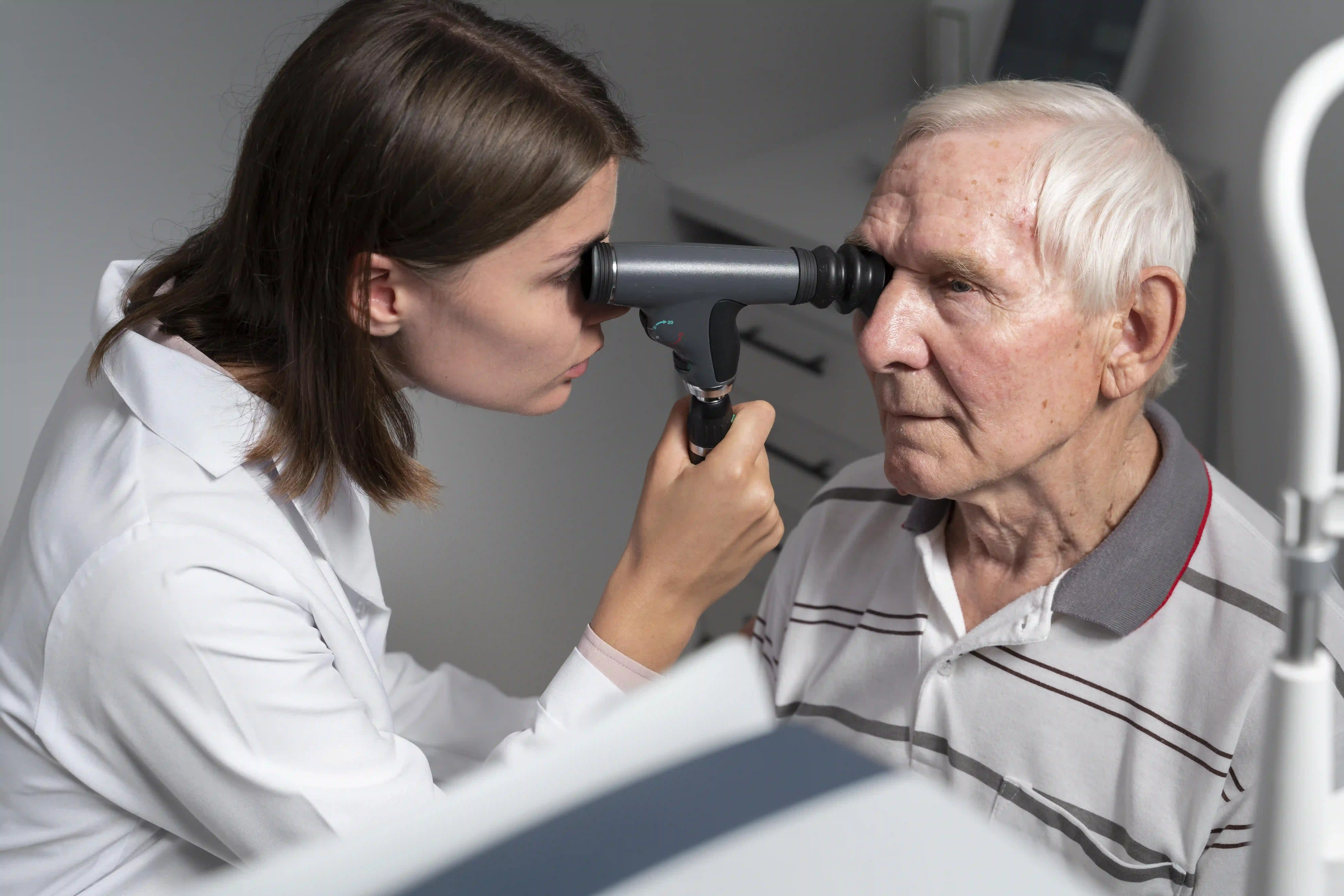
Clinically, a mature cataract is identified on slit lamp examination by the uniform white opacity of the entire lens, absence of the fundal red reflex on retro-illumination, and the patient’s characteristic description of seeing only a white blur or diffuse light.
How Does a Cataract Progress to the Mature Stage?
Cataract development is a continuum — not a single event. The progression from a normal lens to a mature cataract typically follows this pathway:
Incipient stage: Very early lens opacity at the periphery — no visual symptoms. Detectable only on slit lamp examination by an experienced ophthalmologist.
Immature (incipient to moderate) stage: Partial opacity with clear zones remaining — the fundal red reflex is reduced but still visible. Patients experience blurring, glare, and colour changes. This is the most common stage at which patients seek evaluation.
Mature stage: Complete uniform lens opacity — no clear zones. Fundal red reflex absent. Visual acuity is reduced to light perception only. Requires prompt surgical intervention.
Hypermature stage: Lens protein liquefaction begins — the capsule wrinkles, and leaked protein can cause secondary complications including phacolytic glaucoma.
Morgagnian stage: The nucleus sinks in the liquefied cortex — the most advanced and most surgically complex stage, associated with the highest complication risk.
The time from immature to mature cataract varies significantly — from months in diabetic or steroid-related cataracts to years in slowly progressing age-related nuclear cataracts.
5 Major Causes of Mature Cataract
Cause 1 — Age-Related Lens Changes
Ageing is one of the most common causes of cataracts. Over time, oxidative changes cause proteins in the natural lens to clump together and lose transparency, gradually progressing from early clouding to complete lens opacity.
- Most common after age 60, with risk increasing with age
- Nuclear, cortical, and posterior subcapsular cataracts can progress to maturity
- The rate of progression varies from person to person
Cause 2 — Delayed Cataract Treatment
An early cataract may gradually become mature when symptoms are ignored, or treatment is repeatedly delayed. Limited access to eye care, fear of surgery, or waiting until vision becomes severely impaired can contribute to late presentation.
- Early eye examinations can detect cataracts before they become advanced
- Regular eye check-ups are especially important after age 50
- Timely treatment can help prevent severe vision loss from an advanced cataract
Cause 3 — Uncontrolled Diabetes
Poorly controlled diabetes can accelerate changes in the lens because constant high blood sugar causes metabolic and osmotic stress within the eye. Diabetic cataracts may develop and progress earlier than typical age-related cataracts.
- Some cataract types can progress more rapidly in people with diabetes
- Good blood sugar control may help reduce cataract-related risks
- People with diabetes should have regular comprehensive eye examinations
Cause 4 — Prolonged Steroid Use
Long-term use of corticosteroids, whether systemic or in certain other forms, can increase the risk of developing cataracts, particularly posterior subcapsular cataracts. The risk generally increases with higher doses and longer treatment duration.
- Risk is related to both dose and duration
- Long-term steroid users should have regular eye examinations
- Cataracts can occur even in younger patients using steroids for extended periods
Cause 5 — Previous Eye Trauma or Surgery
Eye injuries can affect the natural lens and cause a traumatic cataract, which may progress rapidly. Previous eye surgery, radiation exposure, and certain other forms of eye injury can also contribute to lens clouding.
- Traumatic cataracts can occur at any age
- They may affect only one eye
- Additional eye damage may require careful evaluation and surgical planning
Symptoms of Mature Cataract
Mature cataract produces severe, functionally disabling symptoms that are significantly more pronounced than earlier cataract stages:
- Profound vision loss — vision reduced to light perception or hand movements only; unable to read any print size
- No visual improvement with glasses — because the lens is completely opaque, no refractive correction can improve vision
- Absent red reflex — the characteristic red reflection visible through a normal pupil is not present — identifiable by the family or a doctor using a torch
- White or grey pupil appearance — the complete lens opacity may be visible to others as a milky white pupil in advanced cases
- Loss of ability to recognise faces — functional blindness in the affected eye
- High risk of falls and accidents — severe unilateral or bilateral visual impairment significantly increases fall risk in elderly patients
Mature vs Immature Cataract — Key Differences
| Feature | Immature Cataract | Mature Cataract |
| Lens opacity | Partial — clear zones remain | Complete — uniform white opacity |
| Fundal red reflex | Reduced but present | Absent |
| Visual acuity | Reduced but functional | Light perception only |
| Spectacle correction | May help partially | No improvement possible |
| Surgical urgency | Elective — timed to patient need | Urgent — before complications develop |
| Surgical complexity | Moderate | Higher — harder nucleus, no red reflex |
| Post-op visual outcome | Excellent | Good, but higher complication risk |
| Patient symptoms | Noticeable but manageable | Severely limiting — functional blindness |
Types of Mature Cataracts by Origin
Mature nuclear cataract: The densely brunescent (brown-black) nucleus produces the hardest mature cataract type — requiring the most phacoemulsification energy and carrying the highest risk of corneal endothelial cell loss during surgery.
Mature cortical cataract: Complete cortical opacification with typical milky white appearance — lens consistency is softer than mature nuclear, making surgical aspiration technically easier.
Mature posterior subcapsular cataract: The entire posterior lens is opacified, typically in younger diabetic or steroid-using patients — progresses fastest among the three types and tends to reach maturity at an earlier age.
Risks and Complications of Untreated Mature Cataract
Leaving a mature cataract untreated can cause severe visual impairment and, in advanced cases, lead to additional eye complications.
Phacomorphic glaucoma: A swollen, advanced cataract can push the iris forward and obstruct the eye’s drainage angle, causing a potentially painful and sight-threatening rise in eye pressure.
Phacolytic uveitis: In a hypermature cataract, leaking lens proteins can trigger significant inflammation inside the eye, causing symptoms such as redness, pain and light sensitivity.
Increased surgical complexity: Very dense cataracts can require more energy and careful surgical techniques during lens removal, potentially increasing the risk of complications compared with surgery at an earlier stage.
Severe vision loss: Advanced cataracts can cause profound vision impairment, affecting independence, mobility, everyday activities, and overall quality of life.
Treatment of Mature Cataract — Surgery Is the Only Option
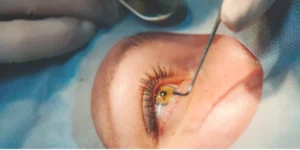
No eye drop, medicine, or supplement can remove an established mature cataract. When a cataract significantly affects vision, cataract surgery with intraocular lens (IOL) implantation is the definitive treatment.
Phacoemulsification for Mature Cataract
Mature cataracts can require additional surgical considerations because the lens may be very dense or the usual red reflex may be absent.
Capsulorrhexis: When the red reflex is poor or absent, the surgeon may use trypan blue dye to stain the anterior capsule, making it easier to visualize while creating the capsule opening.
Phacoemulsification: Dense cataracts may require carefully controlled ultrasound energy to break the cloudy lens into smaller pieces before removal. Modern phacoemulsification systems use advanced energy-delivery techniques to help manage dense lenses.
Cortical aspiration: In mature cataracts, the remaining lens cortex may be liquefied or milky. Careful removal of this material helps reduce residual lens material and postoperative inflammation.
IOL (intraocular lens) Options After Mature Cataract Surgery
The IOL is selected based on pre-operative biometry, corneal astigmatism, and the patient’s visual goals:
| IOL Type | Best Suited For |
| Monofocal IOL | Maximum reliability; glasses for near or distance |
| Toric IOL | Patients with significant corneal astigmatism |
| Multifocal / Trifocal IOL | Spectacle independence goals in suitable candidates |
| EDOF IOL | Extended range with reduced glare profile |
Important note for mature cataract patients: Premium IOL selection (multifocal or trifocal) requires careful patient selection — mature cataract eyes may have reduced macular function from the prolonged light deprivation and should undergo macular OCT assessment before premium IOL commitment.
Recovery and Aftercare After Mature Cataract Surgery
Recovery after mature cataract surgery follows the same general timeline as any cataract surgery, though patients should be aware that visual outcomes may take slightly longer to stabilise:
| Timeline | Expected Recovery |
| Day 1 | Blurring, watering, light sensitivity — normal |
| Day 2-5 | Vision improvement begins — often dramatically for patients who had light perception only |
| Week 1-2 | Return to light day-to-day activities; drops continued |
| Week 4-6 | Visual stability achieved; permanent spectacle prescription if needed |
Post-operative care essentials:
- Antibiotic and steroid drops as prescribed — complete the full course without skipping
- Eye shield during sleep for 7-10 days
- No rubbing, water entry, or dusty environments for 3-4 weeks
- All scheduled follow-up appointments — important after mature cataract surgery where vigilance for complications is higher
Why Timely Treatment Is the Most Important Message
The most significant clinical takeaway about mature cataracts is that they represent a preventable surgical emergency — preventable because regular eye examinations identify cataracts in the immature stage when surgery is simpler, safer, and produces consistently better visual outcomes.
Timely cataract surgery in the immature stage means:
- Lower phacoemulsification energy required
- Better surgical visualisation (red reflex present)
- Lower complication rates
- Better post-operative visual outcomes
- No risk of secondary glaucoma or uveitis from lens protein leakage
If you or a family member has not had an eye examination in the past year — and is over 50, diabetic, or on long-term steroids — scheduling that examination is the single most effective action for preventing mature cataract.
Prevention and Eye Care Tips
These evidence-based strategies slow cataract progression and reduce the likelihood of reaching the mature stage without surgical intervention:
- Annual eye examinations from age 50 — or earlier for diabetic, steroid-using, or high-risk patients
- UV400 sunglasses consistently outdoors — particularly effective at slowing cortical cataract progression
- Strict blood sugar control — well-controlled HbA1c measurably delays diabetic cataract progression
- Antioxidant-rich diet — Vitamin C (amla, citrus), lutein and zeaxanthin (leafy greens), Vitamin E (nuts, seeds)
- Stop smoking — reduces systemic oxidative burden on the lens from the first month of cessation
- Avoid unsupervised steroid eye drops — topical steroids should only be used under ophthalmological supervision
Foods to limit for eye health:
- Refined sugar and processed foods — increase systemic inflammatory burden
- Excessive alcohol — depletes lens antioxidant reserves
- Trans fats and deep-fried foods — increase oxidative stress
Frequently Asked Questions
1. Can a mature cataract be treated?
Yes. Mature cataracts are treated with cataract surgery, in which the cloudy lens is removed and replaced with an artificial intraocular lens (IOL). Surgery can significantly improve vision, although mature cataracts may be more complex to operate on than earlier-stage cataracts.
2. What is the difference between mature and immature cataracts?
An immature cataract has partial lens opacity, with some clear areas remaining. A mature cataract has complete lens opacity and usually causes much more severe vision loss. The surgical approach may also be more complex for a mature cataract.
3. At what age should cataracts be removed?
There is no fixed age for cataract surgery. Cataracts are generally removed when they significantly affect vision or everyday activities. Surgery may be needed earlier in people with diabetes, steroid-related cataracts, or congenital cataracts.
4. Can you live with cataracts without surgery?
Early cataracts can sometimes be managed with updated glasses, better lighting and other measures. However, a mature cataract can cause severe vision loss and should be evaluated by an ophthalmologist to determine whether surgery is appropriate.
5. How long does cataract surgery last?
The artificial intraocular lens (IOL) implanted during cataract surgery is designed to remain in the eye permanently. Some patients may later develop posterior capsule opacification (PCO), commonly called an after-cataract, which can usually be treated with a YAG laser procedure.
6. Which foods should I avoid to prevent cataracts?
There is no specific food that you must completely avoid to prevent cataracts. A balanced diet rich in vegetables, fruits and other nutrient-dense foods supports overall eye health. If you have diabetes, maintaining good blood sugar control is particularly important.
7. What is the biggest cause of cataracts?
Ageing is the most common cause of cataracts. Other factors that can increase risk include diabetes, prolonged UV exposure, smoking, eye injuries and long-term steroid use. Reducing these modifiable risks can help protect overall eye health.
Conclusion
A mature cataract is a medical urgency — not a condition to manage or wait out. Once the lens has reached complete opacity, every further week of delay increases surgical complexity, complications risk, and reduces the certainty of achieving excellent visual outcomes. The best time to treat a cataract is in the immature stage — but the second-best time is right now.
Dr. Arushi Garg — one of the most trusted eye doctors in Noida — provides expert mature cataract assessment and advanced phacoemulsification surgery at AG Vision & CoDE Centre. With fellowship-trained surgical precision and a full range of premium IOL options, Dr. Garg ensures every cataract patient — regardless of the stage at presentation — receives the safest, most effective surgical care available.