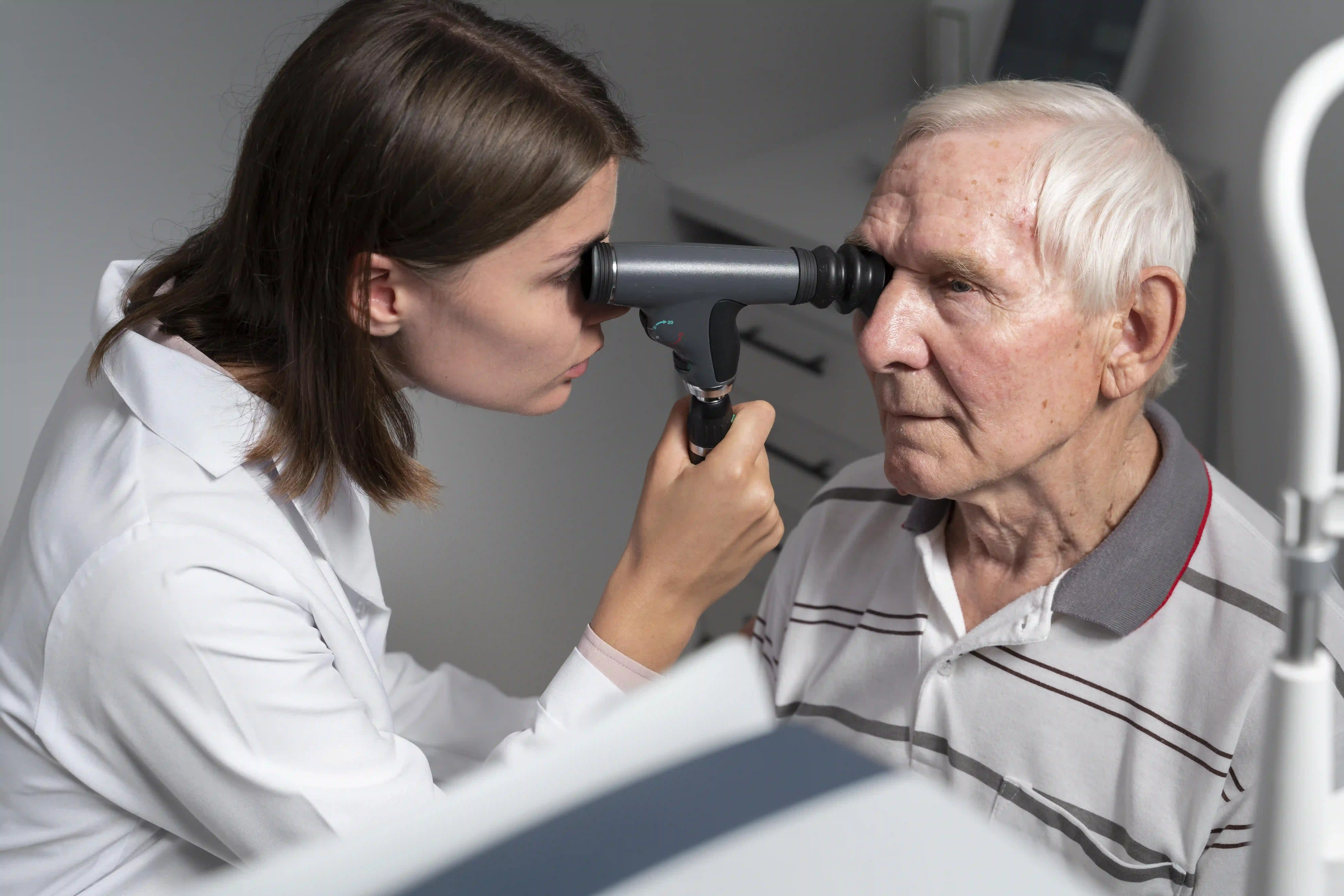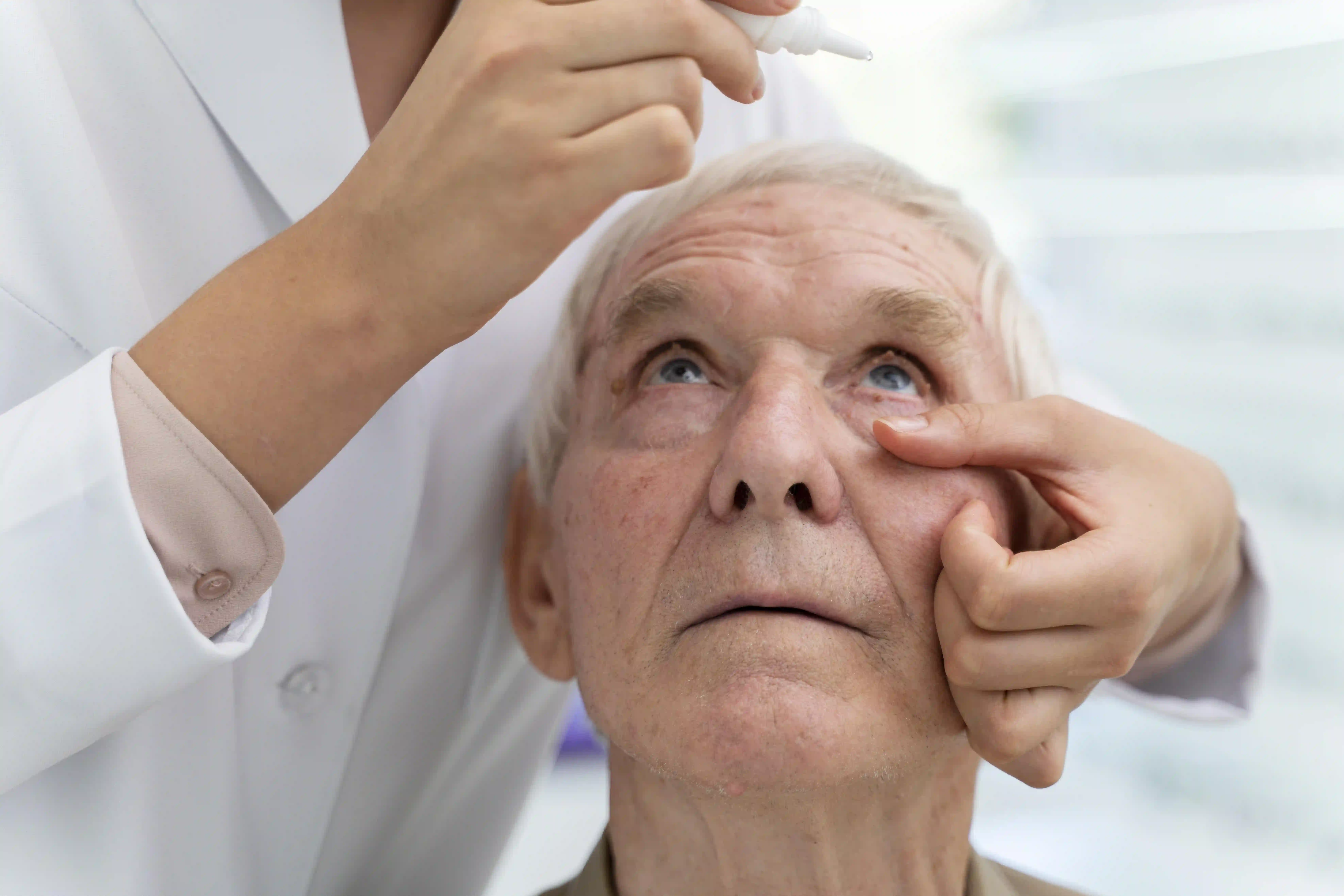
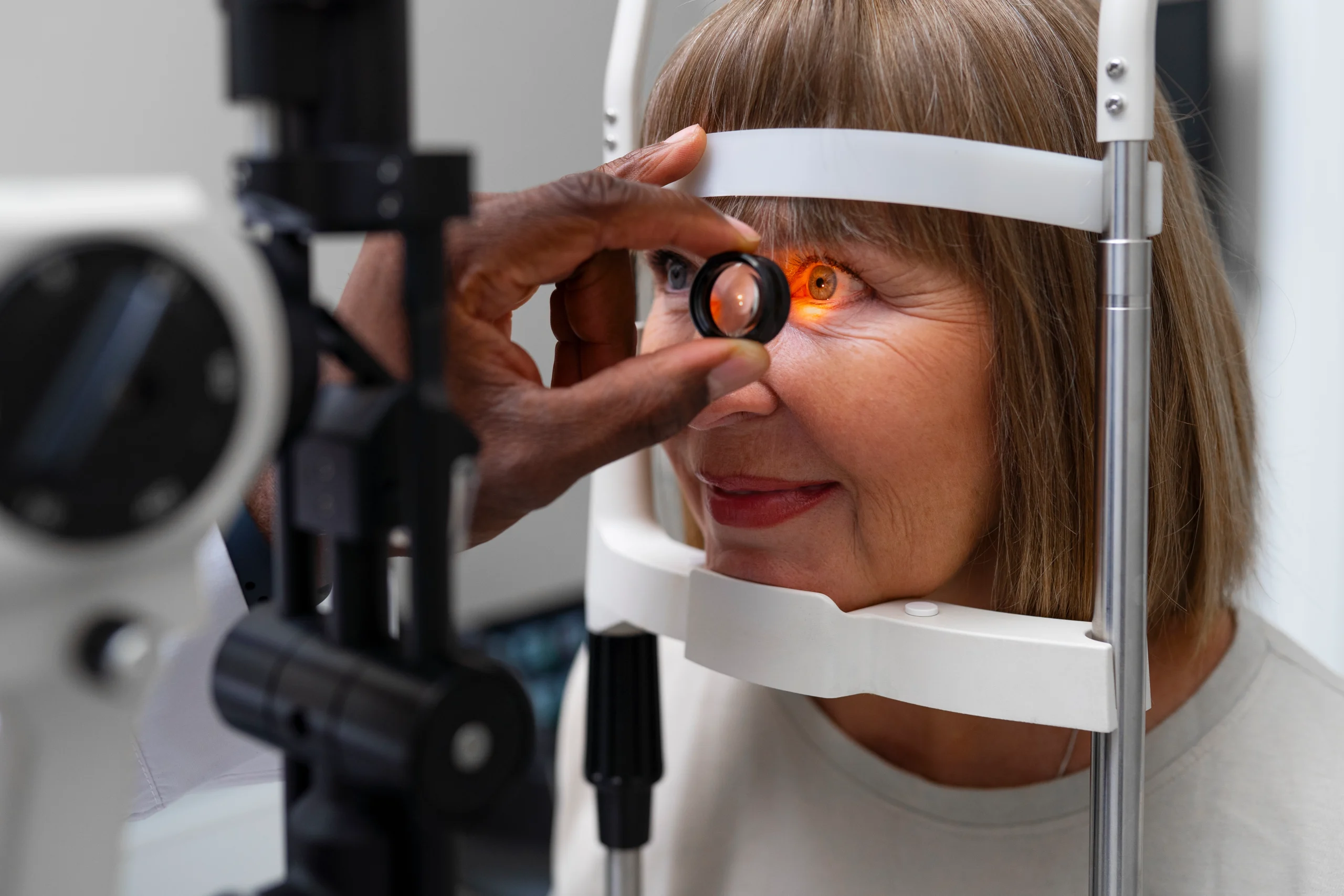
Vision changes are often considered a normal part of ageing, but gradually worsening or cloudy vision may signal a senile cataract. Also called an age-related cataract, it develops when the natural lens of the eye becomes cloudy over time.
A senile cataract usually develops gradually and may cause blurred vision, faded colours, glare, halos around lights, and difficulty seeing at night. Early symptoms can be easy to overlook, but as the cataract progresses, daily activities such as reading, driving, watching television, or recognising faces may become more difficult.
This complete guide explains the causes, symptoms, types, stages, diagnosis, treatment, surgery, recovery, and prevention of senile cataracts, helping you understand when an eye examination may be needed.
What Are Senile Cataracts?
A senile cataract is an age-related opacity of the crystalline lens — the transparent, biconvex structure behind the pupil responsible for focusing light onto the retina. As we age, the structural proteins (crystallins) within the lens undergo progressive oxidative damage, cross-linking, and aggregation — producing opaque clusters that reduce lens transparency and scatter incoming light rather than focusing it.
The result is a gradual, progressive decline in visual quality — affecting contrast sensitivity, colour perception, glare tolerance, and ultimately visual acuity — that cannot be corrected with glasses once it becomes functionally significant.
Senile cataracts are entirely treatable through surgical removal and intraocular lens (IOL) implantation — making them one of the most successfully managed causes of visual impairment in medicine. The challenge is recognising the condition early enough to plan timely and appropriate intervention.
5 Major Common Causes of Senile Cataract
While age is the fundamental factor in senile cataract development, several modifiable and non-modifiable factors accelerate lens protein damage and opacity formation:
Cause 1 — Age-Related Oxidative Stress
The primary mechanism of senile cataract formation is cumulative oxidative damage to lens proteins over decades. The crystalline lens has limited repair capacity compared to most body tissues — its avascular nature means antioxidant delivery is indirect, making it progressively vulnerable to free radical accumulation from UV radiation, metabolic byproducts, and reduced antioxidant enzyme activity with age.
Cause 2 — Ultraviolet Radiation Exposure
UV-B radiation from sunlight directly affects lens proteins through photooxidative reactions — contributing meaningfully to nuclear and cortical cataract formation. Lifetime cumulative UV exposure is strongly associated with senile cataract risk, particularly in outdoor workers, individuals at high altitude, and those in low-latitude regions.
Cause 3 — Systemic Diseases — Especially Diabetes
Diabetes mellitus is one of the strongest modifiable risk factors for accelerated senile cataract development. Chronically elevated blood glucose drives osmotic stress and sorbitol accumulation within the lens — directly damaging structural proteins. Diabetic patients develop senile cataracts 10- 15 years earlier than non-diabetic individuals and with faster progression rates.
Cause 4 — Nutritional Deficiencies
Deficiencies in key antioxidant nutrients — Vitamin C, Vitamin E, lutein, zeaxanthin, and riboflavin — reduce the lens’s capacity to neutralise oxidative damage, accelerating senile cataract formation. These nutrients are naturally concentrated in the crystalline lens as part of its antioxidant defence system.
Cause 5 — Smoking and Alcohol Consumption
Smoking doubles to triples senile cataract risk through systemic oxidative burden and direct toxic effects on lens metabolism. Chronic alcohol consumption depletes lens-protective antioxidants and is independently associated with accelerated nuclear cataract formation. Both are dose-dependent relationships — greater lifetime exposure produces greater risk.
5 Major Symptoms of Senile Cataract to Recognise
Senile cataract symptoms develop gradually — often so slowly that patients adapt before seeking assessment. Recognising these early warning signs enables timely and appropriate intervention before significant visual impairment occurs:
Symptom 1 — Progressive Blurring of Vision
The earliest and most universal symptom of senile cataract — a gradual reduction in visual clarity that is not correctable with an updated glasses prescription. Patients often describe it as looking through frosted or foggy glass.
Symptom 2 — Increased Sensitivity to Glare
Senile cataracts scatter incoming light — producing debilitating glare from headlights when driving at night, sunlight outdoors, and overhead lighting. This symptom is particularly pronounced in posterior subcapsular cataracts.
Symptom 3 — Frequent Changes in Glasses Prescription
Nuclear cataracts produce a myopic shift in the lens — a phenomenon called “second sight,” where patients temporarily regain near vision as the cataract changes the lens’s refractive index. This temporary improvement is followed by progressive decline. Frequent prescription changes in an older adult are a clinical red flag for nuclear cataract development.
Symptom 4 — Fading or Yellowing of Colours
Advanced senile cataracts — particularly nuclear cataracts — develop a brownish-yellow tint that progressively filters the colour spectrum. Patients describe colours as faded, washed out, or with a yellowish cast — reducing the vibrancy of blues and purples most noticeably.
Symptom 5 — Monocular Diplopia (Double Vision in One Eye)
Optical distortion caused by irregular lens opacity can produce double or multiple ghost images when one eye is tested alone — a symptom that disappears when both eyes are open. This monocular diplopia is highly characteristic of senile cataract and should prompt ophthalmological evaluation.
Types of Senile Cataracts
Senile cataracts are classified by the location of opacity within the lens — each type producing a characteristic symptom pattern:
Nuclear Cataract
The most common type of senile cataract — opacity develops in the central nucleus of the lens, initially producing a myopic shift before progressing to dense brown (brunescent) opacity. Nuclear cataracts typically progress slowly over years.
Cortical Cataract
Spoke-like opacities develop in the lens cortex (the peripheral layers surrounding the nucleus) — producing glare and reduced contrast sensitivity, particularly in bright light. Cortical cataracts progress at variable rates and are strongly associated with UV-B exposure.
Posterior Subcapsular Cataract (PSC)
A plaque-like opacity on the back surface of the lens — directly in the path of light. PSC is the most visually disabling type relative to its size, producing severe near vision impairment and glare even when the opacity is small. It is also the fastest-progressing type and is associated with steroid use and diabetes.
Anterior Subcapsular Cataract
Less common — opacity on the front surface of the lens capsule. Often associated with uveitis or previous ocular trauma but can occur as part of the senile cataract spectrum.
Stages of Senile Cataract Progression
Understanding the progression stages helps patients and families plan appropriate intervention timing:
| Stage | Description | Visual Impact |
| Immature (incipient) | Partial lens opacity — clear zones remain | Mild visual symptoms; spectacle correction may still help |
| Mature | Complete lens opacity — no clear zones | Significant visual impairment; light perception only in advanced cases |
| Hypermature | Lens liquefaction begins; wrinkled capsule | Severe vision loss; risk of secondary glaucoma |
| Morgagnian | Nucleus sinks in liquefied cortex | Complete visual loss; surgical risk significantly increased |
Clinical implication: Surgery is safest and most successful in the immature stage. Waiting until the mature or hypermature stage increases surgical complexity, the risk of complications, and the difficulty of achieving optimal visual outcomes.
When Should You See a Doctor for Senile Cataract?
Seek ophthalmological evaluation promptly if you or a family member notices:
- Blurred vision that is not corrected by a new glasses prescription
- Increasing difficulty with night driving or severe glare from headlights
- A change in glasses prescription required more than once within 12 months
- Double vision in one eye
- Colours appearing faded, yellowish, or washed out
- Difficulty reading standard print despite optimal glasses
Do not wait for complete vision loss before seeking assessment. Timely evaluation allows monitoring of progression and planning of timely surgical intervention — before the cataract reaches a mature or hypermature stage that increases surgical risk.
Treatment Options for Senile Cataract
Non-Surgical Management (Early Stage)
In the earliest stages, when vision is only mildly affected, management focuses on optimising remaining visual function while monitoring progression:
- Updated spectacle prescription — as the myopic shift develops in nuclear cataracts
- Anti-glare coatings on glasses — for improved night driving and outdoor comfort
- Magnification aids — for reading difficulties in early-stage cortical or PSC cataracts
- Nutritional optimisation — Vitamin C, lutein, zeaxanthin supplements to support remaining antioxidant defence
Important: No medication, eye drop, or supplement can reverse established senile cataract opacity. Non-surgical management is a temporary quality-of-life measure — not a cure.
Surgical Treatment — Phacoemulsification (Phaco)
Advanced senile cataract surgery uses phacoemulsification — ultrasound energy through a micro-incision of 2.2- 3.0 mm — to emulsify and aspirate the clouded lens, replacing it with a clear foldable intraocular lens (IOL).
Key features of phacoemulsification for senile cataract:
- Topical anaesthetic eye drops — no needle injections
- 10-20 minute procedure
- Self-sealing micro-incision — no stitches in most cases
- Day procedure — home the same day
- Vision improvement typically within 24-48 hours
IOL (Intraocular lens) options for senile cataract patients:
| IOL Type | Visual Result | Best For |
| Monofocal IOL | Clear distance or near vision (glasses for the other) | Cost-effective, highest reliability |
| Toric IOL | Distance vision with astigmatism correction | Patients with significant corneal astigmatism |
| Multifocal IOL | Distance and near without glasses | Patients wanting spectacle independence |
| EDOF IOL | Extended range with reduced glare vs multifocal | Active elderly patients; reduced dysphotopsia |
FLACS — Femtosecond Laser-Assisted Cataract Surgery
The most advanced senile cataract surgery technique — using laser to perform the incision, capsulotomy, and lens pre-fragmentation with sub-millimetre precision. FLACS is particularly beneficial for patients choosing premium IOLs where precise capsulotomy centration directly affects optical performance.
Recovery After Senile Cataract Surgery
Recovery from phacoemulsification for senile cataract is one of the fastest in elective surgery:
| Timeline | Expected Experience |
| Day 1 | Mild watering, light sensitivity — normal |
| Days 2-3 | Most patients notice significant vision improvement |
| Week 1-2 | Return to light everyday activities; no driving until cleared |
| Week 4-6 | Final visual stability; permanent spectacle prescription if needed |
Post-operative instructions:
- Antibiotic and anti-inflammatory eye drops as prescribed — never stop early
- Eye shield during sleep for 7-10 days
- No rubbing, water entry, or dusty environments for 2-4 weeks
- Attend all scheduled post-operative appointments
Can Senile Cataracts Be Prevented?
Senile cataracts cannot be entirely prevented — age-related lens protein changes are a universal biological process. However, several strategies meaningfully slow progression and delay the point at which surgery becomes necessary:
- Consistent UV400 sunglasses use — the most evidence-based environmental prevention measure
- Strict blood sugar control in diabetic patients — reduces the rate of progression significantly
- Smoking cessation — reduces systemic oxidative burden from the first month
- Antioxidant-rich diet — leafy greens (lutein, zeaxanthin), citrus (Vitamin C), nuts and seeds (Vitamin E)
- Regular eye examinations — from age 50, or earlier if risk factors are present, to catch cataracts while they are still in the immature stage
Frequently Asked Questions
1. What is the difference between a cataract and a senile cataract?
All senile cataracts are cataracts, but not all cataracts are senile. Senile cataract specifically refers to an age-related cataract, while other types may develop due to eye injury, congenital conditions, medications, or certain diseases.
2. Which is the most common type of senile cataract?
Nuclear cataract is one of the most common types of age-related cataract. It affects the central part of the lens and can gradually cause blurred vision, changes in colour perception, and difficulty seeing clearly.
3. How fast do senile cataracts progress?
Senile cataracts usually develop gradually, but the rate varies from person to person. Some progress slowly over several years, while others may affect vision more quickly. Regular eye examinations help monitor cataract progression.
4. Should an 82-year-old have cataract surgery?
Age alone does not determine whether cataract surgery is suitable. The decision depends on visual impairment, impact on daily activities, overall health, eye condition, and potential surgical benefits and risks. An ophthalmologist can recommend the appropriate approach after evaluation.
5. What are the newest treatments for senile cataracts in 2026?
Modern cataract treatment includes phacoemulsification, femtosecond laser-assisted cataract surgery, EDOF (Extended Depth of Focus) IOLs, and Light Adjustable Lenses in selected patients. The most suitable option depends on individual eye health, lifestyle, and visual requirements.
Conclusion
Senile cataract is a common age-related eye condition, but the latest cataract surgery can restore clear vision for many suitable patients. Early evaluation is crucial, especially when cloudy or blurred vision begins affecting reading, driving, work, or everyday activities.
The right treatment depends on the cataract’s severity, overall eye health, and individual visual needs. An ophthalmologist can determine whether monitoring, updated glasses, or cataract surgery is appropriate.
Dr. Arushi Garg — one of the most trusted eye doctors in Noida — provides comprehensive senile cataract evaluation, personalised IOL selection, and advanced phacoemulsification at AG Vision & CoDE Centre, with a patient-focused approach to cataract care.