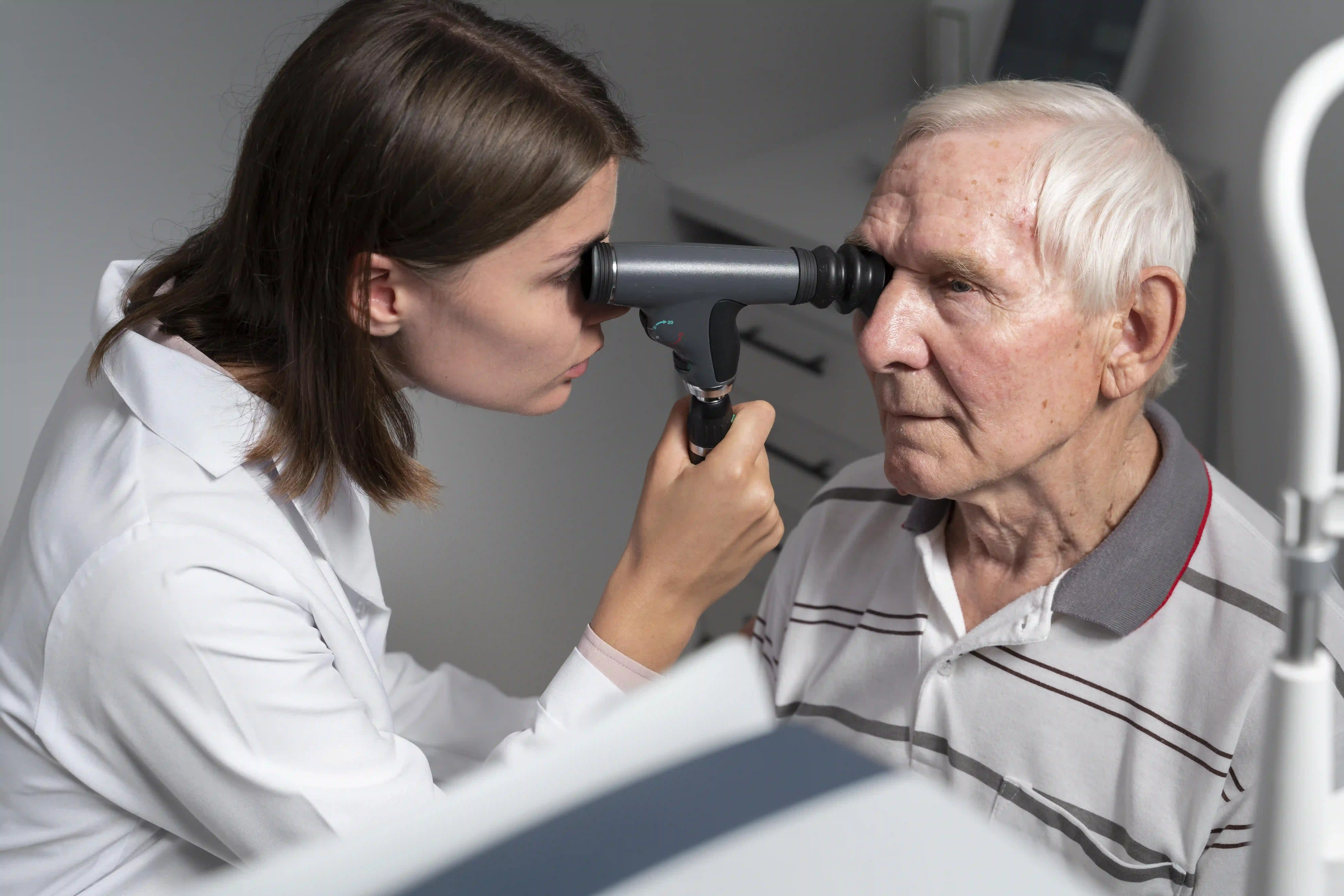

Cataracts are one of the most common causes of age-related vision problems. They develop when the normally clear lens inside the eye becomes cloudy, causing vision to appear blurred, hazy, or less colorful. Although ageing is the most common reason for cataract formation, diabetes, UV exposure, smoking, certain medicines, eye injuries, and other factors can also increase the risk.
But what is the reason for cataracts in some people at a younger age? And can lifestyle changes help reduce the risk?
This complete guide explains the common causes of cataracts, risk factors, early symptoms, and practical ways to protect your vision.
What Is a Cataract? A Quick Overview
A cataract is the progressive clouding of the eye’s natural crystalline lens — the transparent, flexible structure that sits just behind the pupil and focuses light onto the retina. When proteins within this lens break down or clump together, the lens loses its natural clarity and begins to scatter rather than focus incoming light.
The result is a gradual decline in visual quality — initially subtle, then progressively affecting the ability to read, drive, recognise faces, and function independently. Cataracts are the major cause of reversible blindness worldwide, yet they are entirely treatable with advanced cataract surgery when identified at the right stage.
Most cataracts develop slowly over years. Some progress faster — particularly in younger patients or those with specific risk factors.
What Is the Reason for Cataract Formation?
The reason for cataract formation is, at its most fundamental level, oxidative damage to the proteins that make up the crystalline lens. The lens is composed primarily of water and structural proteins called crystallins — which, in a healthy eye, are arranged in a precise, transparent pattern.
When these proteins are damaged by oxidative stress, ultraviolet radiation, metabolic disruption, or physical trauma, they begin to aggregate into opaque clusters — reducing lens transparency and producing the progressive clouding that defines a cataract.
Different causes damage these lens proteins through different mechanisms — which is why cataracts present differently depending on their underlying reason.
7 Common Causes of Cataracts
Cause 1 — Age-Related Changes in the Lens
The most common cause for cataract formation worldwide is simply ageing. As the lens ages, its water content decreases, its protein structure deteriorates, and its ability to repair oxidative damage declines — all of which accelerate opacity.
Age-related nuclear cataracts — forming in the centre of the lens — are the most prevalent type globally, affecting a significant proportion of adults over 60.
- Nuclear cataracts cause a myopic shift (temporary improvement in near vision called “second sight”) before progressive blurring begins
- Cortical cataracts — spoke-like peripheral opacities — also increase sharply with age
- By age 75, the majority of adults have some degree of clinically relevant lens opacity
Cause 2 — Diabetes and Blood Sugar Disorders
Diabetes is one of the most significant modifiable risk factors for cataract formation — and one of the major reasons why diabetic patients develop cataracts 10-15 years earlier than non-diabetic individuals.
Chronically elevated blood glucose drives osmotic swelling and sorbitol accumulation within the lens — a biochemical pathway that directly accelerates protein damage and opacity formation.
- Posterior subcapsular cataracts are the most common cataract type in diabetic patients — producing glare and near-vision impairment early
- Poorly controlled blood sugar dramatically accelerates cataract progression compared to well-controlled diabetes
- Every 1% reduction in HbA1c is associated with a meaningful reduction in diabetic cataract risk
Cause 3 — Prolonged Ultraviolet (UV) Radiation Exposure
Ultraviolet radiation — particularly UV-B — is a well-established environmental cause of cataract formation. UV-B photons penetrate the eye and directly damage lens proteins through photooxidative reactions.
Cumulative lifetime UV exposure, rather than single episodes of intense exposure, is the primary driver — making lifelong UV protection one of the most evidence-based cataract prevention strategies available.
- Populations with greater lifetime sun exposure consistently show higher cataract prevalence
- Outdoor workers, farmers, and individuals living at high altitudes or low latitudes face the greatest UV-related cataract risk
- UV400 sunglasses that block 99-100% of UV radiation significantly reduce lens exposure
Cause 4 — Steroid Medication Use
Long-term or high-dose corticosteroid use — whether systemic (oral or injectable) or topical (eye drops for chronic conditions) — is a well-documented pharmacological cause of cataract formation.
Steroids cause posterior subcapsular cataracts — the fastest-progressing and most visually disabling cataract type — through mechanisms that directly damage the lens epithelium.
- The risk is dose-dependent and duration-dependent — longer use and higher doses produce higher risk
- Patients on long-term steroid therapy for asthma, rheumatoid arthritis, or inflammatory bowel disease should have annual eye examinations
- Even topical steroid eye drops for conditions like allergic conjunctivitis carry cataract risk with prolonged unsupervised use
Cause 5 — Eye Injury or Trauma
Physical trauma to the eye — blunt impact, penetrating injury, or chemical exposure — can directly damage lens proteins and cause a traumatic cataract. These can develop immediately following injury or appear months to years later as delayed-onset lens opacification.
Traumatic cataracts often affect a single eye and can present in younger patients following sports injuries, road accidents, or occupational eye injuries.
- Blunt trauma (without penetration) typically causes a star-shaped or rosette cataract pattern in the posterior lens
- Penetrating injury — where a foreign body or sharp object enters the eye — can cause rapid, dense cataract formation
- Radiation exposure, including from radiotherapy to the head or neck, also causes radiation-induced cataracts
Cause 6 — Congenital and Genetic Factors
Some cataracts are present at birth or develop within the first year of life — caused by genetic mutations, chromosomal abnormalities, or maternal infections during pregnancy. Congenital cataracts require early surgical intervention to prevent amblyopia (irreversible visual loss from sensory deprivation during critical visual development).
A family history of cataracts also significantly increases the risk of early-onset age-related cataracts in adults — suggesting an inherited component to lens protein vulnerability.
- Congenital cataracts affect approximately 1-3 per 10,000 live births
- Maternal infections in the first trimester — rubella, toxoplasmosis, CMV — are associated with congenital cataract development
- Chromosomal conditions including Down syndrome carry significantly elevated congenital cataract risk
Cause 7 — Smoking and Alcohol Consumption
Smoking is one of the most consistently proven preventable causes of cataract — with smokers showing 2-3 times the cataract risk of non-smokers in large epidemiological studies. Tobacco smoke produces a systemic oxidative burden that depletes the lens’s antioxidant defences and accelerates protein damage.
Chronic heavy alcohol consumption is independently associated with increased cataract risk — through nutritional depletion of lens-protective antioxidants and direct metabolic effects.
- Nuclear cataracts are the most strongly associated cataract type with cigarette smoking
- The risk is dose-dependent — greater lifetime tobacco exposure produces greater cataract risk
- Smoking cessation reduces but does not eliminate the accumulated cataract risk from prior exposure
What Are the Risk Factors for Cataracts?
Beyond the seven primary causes, several additional factors elevate cataract risk:
- Age over 60 — the most universal risk factor
- Female sex — women show consistently higher cataract rates than men across most population studies
- Hypertension — associated with oxidative damage to lens proteins
- Obesity — linked to increased cataract risk through systemic inflammatory and metabolic pathways
- Myopia (high short-sightedness) — highly myopic patients have elevated nuclear cataract risk
- Prolonged use of certain medications — chlorpromazine, amiodarone, and some diuretics
- Occupational exposure — to solvents, radiation, or intense UV environments
Early Signs You May Be Developing a Cataract
Recognising early cataract symptoms helps patients seek evaluation while more management options are still available:
- Blurred or hazy vision that is not corrected by updated glasses
- Increased sensitivity to glare — particularly from headlights at night or bright sunlight
- Fading or yellowing of colours — colours appear less vivid or have a yellowish tint
- Frequent changes in glasses prescription — particularly rapid myopic shift in older adults
- Monocular diplopia — double vision in one eye when the other is closed
- Reduced night vision — difficulty in low-light environments
Why Do Cataracts Develop at a Younger Age?
While age-related cataracts typically present after 60, younger patients are increasingly presenting with early-onset cataracts — driven by specific risk factors:
- Poorly controlled diabetes — the most common metabolic cause in younger adults
- Prolonged high-dose steroid use for autoimmune or inflammatory conditions
- Previous eye injury — traumatic cataracts can develop at any age
- Intense UV exposure — particularly in young outdoor workers or athletes without UV protection
- Smoking from a young age — cumulative oxidative damage starts accumulating from the first year of smoking
- Genetic predisposition — family history of early cataracts
Can Cataracts Be Caused by Vitamin Deficiency?
Yes — specific nutritional deficiencies are associated with increased cataract risk:
- Vitamin C deficiency — the aqueous humour and lens contain high concentrations of Vitamin C as an antioxidant; deficiency reduces lens protection against oxidative damage
- Vitamin E deficiency — a crucial fat-soluble antioxidant protecting lens cell membranes
- Lutein and zeaxanthin deficiency — these carotenoids are naturally concentrated in the lens and retina, filtering blue light and neutralising free radicals
- Vitamin A deficiency — affects ocular surface and retinal health, indirectly increasing lens vulnerability
- Riboflavin (Vitamin B2) deficiency — associated with cataracts in several population studies, particularly in nutritionally deficient populations
Tips to Prevent Cataracts and Protect Your Vision
No intervention can guarantee cataract prevention, but evidence-based strategies meaningfully reduce risk and slow progression:
- Wear UV400 sunglasses consistently outdoors — the single most effective environmental cataract prevention measure
- Control blood sugar rigorously — particularly important for patients with diabetes or pre-diabetes
- Stop smoking — reducing the progressive oxidative burden on lens proteins
- Eat an antioxidant-rich diet — leafy greens (lutein, zeaxanthin), citrus fruits (Vitamin C), nuts and seeds (Vitamin E), and colourful vegetables
- Limit alcohol intake — reducing metabolic and nutritional depletion of lens-protective antioxidants
- Avoid unnecessary steroid eye drops — only use topical steroids under ophthalmological supervision
- Attend regular eye examinations — annual from age 40, or from diagnosis of diabetes at any age
- Wear protective eyewear for sports, occupational hazards, and any activity with eye injury risk
When Should You See an Eye Doctor for Cataracts?
Schedule an eye examination promptly if you notice:
- Any new or progressive blurring not resolved by updated glasses
- Increasing difficulty with night driving or oncoming headlight glare
- Monocular diplopia — double vision in one eye
- Rapid change in glasses prescription over a short period
- Reduced colour vibrancy or yellowing of vision
Seek urgent review if:
- Sudden vision change in one or both eyes
- Eye pain with visual symptoms — possible secondary glaucoma from a hypermature cataract
- Any eye injury followed by vision change
Frequently Asked Questions
1. How can I avoid cataracts in my eyes?
Protect your eyes from UV exposure, control blood sugar, avoid smoking, eat a nutrient-rich diet, avoid prolonged unsupervised steroid use, and have regular eye examinations.
2. Is a cataract very serious?
Cataracts can significantly affect vision, but they are treatable with cataract surgery. Early diagnosis and timely treatment can help prevent worsening vision and complications.
3. When do cataracts start developing?
Lens changes often begin in the 40s, while noticeable age-related cataract symptoms usually develop later. Diabetes, steroid use, and eye injuries can cause cataracts at a younger age.
4. Can an eye cataract go away on its own?
No. An established cataract cannot be reversed with eye drops, medicines, or natural remedies. Cataract surgery is the effective treatment when vision is significantly affected.
5. Which foods help prevent cataracts?
Leafy greens, citrus fruits, amla, nuts, seeds, eggs, avocados, and colourful vegetables provide nutrients such as lutein, zeaxanthin, and vitamins C and E that support eye health.
Conclusion
The reason for cataract formation is rarely a single factor — it is typically the combined effect of ageing, lifestyle choices, medical conditions, and environmental exposures acting on the lens over decades. Understanding your personal risk profile gives you both the motivation and the tools to reduce that risk — through UV protection, blood sugar control, antioxidant nutrition, and regular eye examinations.
Dr. Arushi Garg — one of the most trusted eye doctors in Noida — provides comprehensive cataract evaluation at AG Vision & CoDE Centre, with personalised assessment of cataract risk factors, stage of progression, and the full range of surgical options, including MICS and premium IOL implantation, when surgery is indicated.