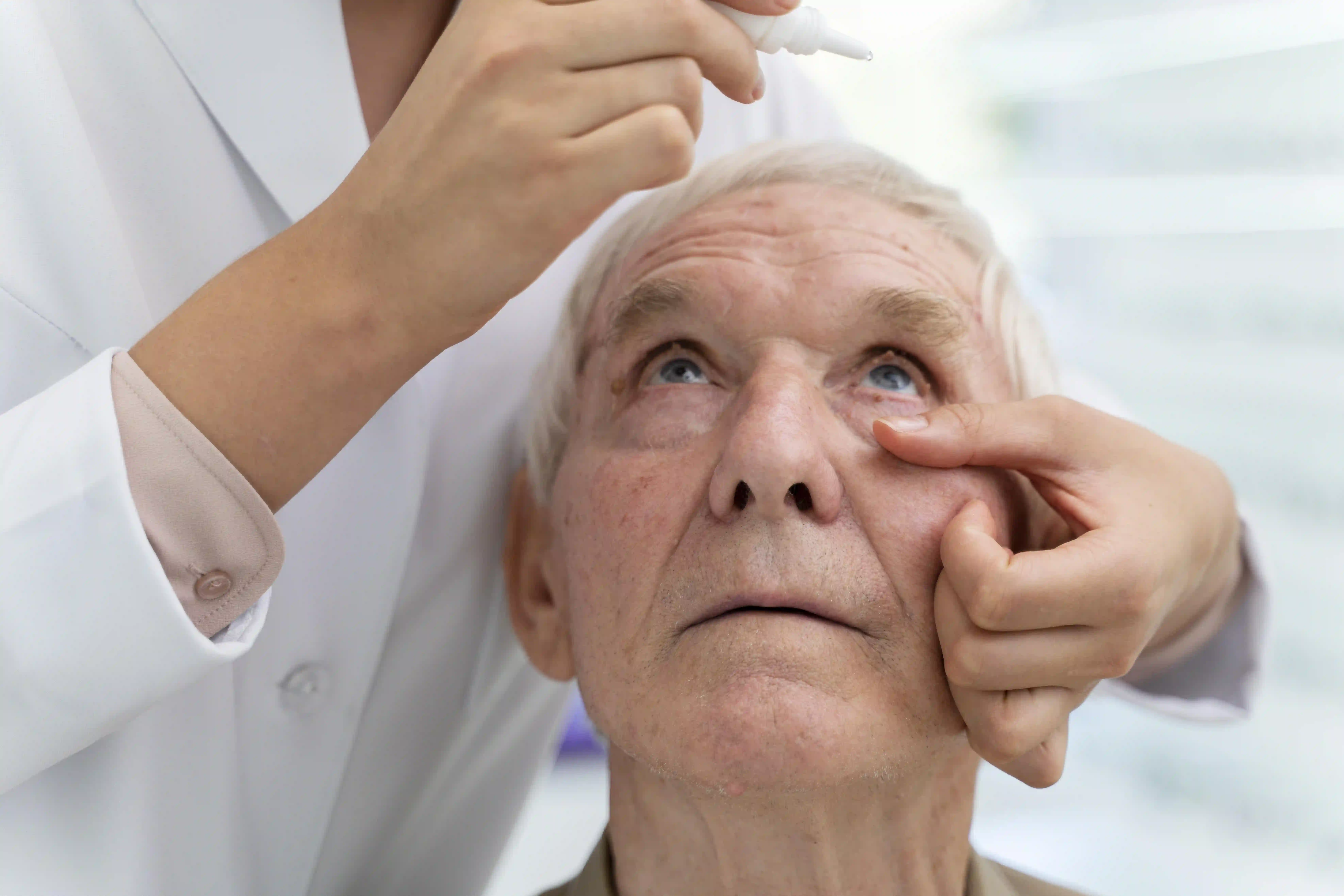
A cataract is one of the most common causes of blurred vision, especially as people age. If you’ve recently been diagnosed with cataracts, you may be wondering whether there’s a Cataract Cure Without Surgery or if surgery is the only effective treatment.
While many websites claim that eye drops, supplements, or natural remedies can cure cataracts, it’s important to separate myths from medical facts. In this complete guide, you’ll learn whether Cataract Cure Without Surgery is possible, the available non-surgical treatment options, ways to slow cataract progression, and when cataract surgery becomes the safest and most effective solution for restoring clear vision.
What Is a Cataract — and Is a Non-Surgical Cure Really Possible?
A cataract is the progressive clouding of the eye’s natural crystalline lens — the structure that sits behind the pupil and focuses light onto the retina. As the lens proteins break down and clump together over time, the lens loses its clarity, producing blurred vision, glare sensitivity, reduced contrast, and eventually significant functional visual impairment.
Cataracts develop primarily because of age-related oxidative changes to lens proteins — a biological process that, once underway, cannot currently be pharmacologically reversed. The crystalline lens has no blood supply and very limited cellular repair capacity, which is why no topical or systemic treatment has yet proven capable of dissolving or reversing established lens opacity.
This does not mean patients are powerless. Understanding what can and cannot be done without surgery is the foundation of every honest conversation about cataract cure without surgery.
What Exactly Are Cataracts — Types That Affect Treatment Choices
Not all cataracts are identical, and understanding the type helps clarify realistic management expectations:
Nuclear Cataract: The most common age-related type — central lens clouding causing progressive near-sightedness shift (myopic creep) before blurring worsens.
Cortical Cataract: Spoke-like opacities in the lens cortex producing glare and reduced contrast — often progresses more slowly than nuclear cataract.
Posterior Subcapsular Cataract (PSC): Forms on the back surface of the lens — produces the fastest, most disabling visual decline. Often associated with steroid use or diabetes. PSC progresses more rapidly than other types.
Congenital Cataract: Present from birth — requires early surgical intervention to prevent irreversible amblyopia. Non-surgical management is never appropriate for congenital cataract.
Why Do Patients Seek Cataract Removal Without Surgery?
Understanding why so many patients search for a non-surgical cataract cure helps explain the persistence of the question despite clear scientific consensus:
- Fear of surgery — particularly eye surgery, which many patients find psychologically daunting
- Cost concerns — cataract surgery costs are a genuine barrier for some patients, particularly in private healthcare settings
- Misinformation — a significant volume of online content promotes unvalidated eye drops, supplements, and dietary protocols as cataract cures without surgical risk
- Early-stage cataracts — many patients with mild cataracts genuinely do not need surgery yet and are looking for guidance on delaying progression
All of these are valid concerns — and all deserve an honest, evidence-based response.
Options for Managing Early Cataracts Without Immediate Surgery
While there is no cataract cure without surgery that reverses established lens opacity, several approaches can meaningfully manage early-stage cataracts and delay the point at which surgery becomes functionally necessary:
Updated Spectacle Prescription
In early nuclear cataract, the myopic shift in the lens can actually improve near vision temporarily — a phenomenon called “second sight.” An updated glasses prescription from an optometrist or ophthalmologist can restore functional vision for reading and daily tasks in the early stages.
Glare Management and Lighting Optimisation
- Anti-glare coatings on spectacles reduce light scattering discomfort
- Avoiding night driving reduces risk from headlight glare
- Increasing indoor lighting improves contrast for everyday tasks
- Adjusting screen brightness and contrast on digital devices reduces eye strain
Dilating Drops in Specific Cases
In selected cases of central PSC cataracts where the opacity is small and central, dilating drops can widen the pupil enough for the patient to see around the opacity — providing a temporary functional improvement. This is a short-term management strategy, not a cure.
Natural Ways to Slow Cataract Progression
While natural methods cannot cure cataracts or dissolve existing lens opacity, specific lifestyle choices are genuinely associated with slower progression — backed by population-level epidemiological evidence:
UV Protection:
Ultraviolet light — particularly UV-B — is directly linked to accelerated lens protein oxidation. Wearing UV400 sunglasses consistently outdoors reduces cumulative UV exposure to the lens and slows progression in UV-sensitive cataract types.
Nutrition and Antioxidant-Rich Diet:
- Vitamin C (amla, citrus, guava) — associated with reduced cataract risk in several large cohort studies
- Lutein and zeaxanthin (leafy greens, spinach, kale) — natural lens antioxidants
- Vitamin E (almonds, sunflower seeds) — free radical scavenging in lens tissue
- Omega-3 fatty acids (flaxseed, fish) — general ocular health support
Blood Sugar Control:
Diabetes is one of the strongest modifiable risk factors for cataract development and accelerated progression. Patients with well-controlled HbA1c consistently show slower cataract progression than those with poorly controlled diabetes.
Smoking Cessation:
Smoking significantly increases oxidative stress in lens tissue. Multiple large studies confirm smokers have substantially higher cataract risk and faster progression than non-smokers.
Alcohol Reduction:
Chronic alcohol consumption increases lens oxidative burden — reducing alcohol intake is a genuine lens-health intervention.
Role of Supplements and Eye Drops — What Does the Evidence Say?
This is the most frequently searched and most frequently misleading area of cataract cure without surgery information online.
Antioxidant Supplements
Products containing lutein, zeaxanthin, Vitamin C, and Vitamin E are frequently marketed for eye health. Evidence suggests these compounds may slow cataract progression in nutritionally deficient populations — but they do not reverse established opacity.
The honest verdict: Supplementation is beneficial when dietary intake is inadequate. It is not a substitute for treatment in advancing cataracts.
Eye Drops Reality
Eye drops have been aggressively marketed online as a non-surgical cataract cure. The limited clinical studies supporting their use have significant methodological flaws — small sample sizes, poor blinding, no independent replication.
The scientific consensus in 2026: No eye drop currently has regulatory approval or robust clinical evidence supporting reversal of lens opacity. Major ophthalmological bodies including the American Academy of Ophthalmology have not endorsed any topical cataract cure.
Carnosine, Bilberry, and Herbal Products
None of these have passed the clinical trial threshold required for medical endorsement as cataract treatments. They may provide general antioxidant support but should not be used as a reason to delay medically indicated surgery.
Can You Reverse Cataracts Naturally? The Science-Based Answer
No — established cataract opacity cannot currently be reversed naturally or pharmacologically. Once lens proteins have cross-linked and aggregated into opacities, no known biological or chemical process restores them to their original transparent configuration.
Research into pharmacological cataract reversal is active — particularly around compounds like lanosterol and VP1-001, which have shown some ability to dissolve lens aggregates in animal models. As of 2026, no such compound has completed successful human clinical trials or achieved regulatory approval.
The most important scientific truth for patients searching for cataract cure without surgery is this: delaying necessary surgery with unproven treatments causes preventable vision loss that surgery could have corrected earlier.
Myths and Facts About Cataract Cure Without Surgery
| Myth | Fact |
| “Eye exercises can reverse cataracts” | No evidence supports any exercise regimen reversing lens opacity |
| “Herbal eye drops dissolve cataracts” | No herbal formulation has clinical proof of cataract reversal |
| “N-acetylcarnosine drops are proven to work” | Studies are methodologically weak; no regulatory body endorses them |
| “Eating more carrots will cure cataracts” | Good nutrition slows progression — it cannot dissolve existing opacity |
| “Cataracts can wait indefinitely without consequence” | Delayed surgery in dense cataracts increases surgical risk and complications |
| “Cataract surgery is very risky” | Modern phacoemulsification has serious complication rates below 1% in experienced hands |
| “Only the elderly need cataract surgery” | Cataracts can develop at any age — diabetes and steroids accelerate onset significantly |
Preventing Cataracts in the Future — What Actually Works
While current cataracts cannot be cured without surgery, future cataract development can be meaningfully reduced and prevented:
- Consistent UV400 eyewear outdoors — the single most effective cataract prevention intervention
- Strict blood glucose control for diabetic patients
- Avoid unnecessary or prolonged steroid use — particularly topical steroids without ophthalmological supervision
- Antioxidant-rich diet throughout life — not just after diagnosis
- Regular ophthalmological check-ups — catching cataracts early maximises management options
- Smoking cessation — reduces oxidative lens damage from the first month of stopping
When Is Surgery Necessary — and Why Delaying Has Real Consequences
When Cataract Surgery Becomes Medically Indicated
Surgery is appropriate — and should not be delayed — when:
- Best corrected visual acuity falls below 6/18 in the affected eye
- Vision impairment affects driving safety, occupational function, or daily independence
- Glare significantly impairs quality of life despite optical management
- The cataract is causing secondary problems — phacomorphic glaucoma (pressure rise from a swollen lens) or uveitis from hypermature cataract
- A child’s cataract risks amblyopia — surgical delay in paediatric cases causes irreversible visual deficit
The Risk of Prolonged Delay
Hypermature cataracts — those left unoperated for too long — carry significantly higher surgical complication rates than timely surgery. The lens can swell, cause glaucoma, and in extreme cases liquefy — making surgery more complex and outcomes less predictable. The safest time for cataract surgery is when functional vision is impaired — not when the cataract has progressed beyond safe operative parameters.
When to See a Doctor About Your Cataracts
See an ophthalmologist promptly if you constantly experience:
- Noticeable blurring that is not corrected by updated glasses
- Increasing difficulty with night driving or oncoming headlight glare
- A change in colour perception — objects appearing yellow-tinted or washed out
- Monocular diplopia — double vision in one eye
- Rapid vision change over weeks rather than months
- Any sudden vision change alongside eye pain or redness — possible phacomorphic glaucoma
Frequently Asked Questions
1. Can I live without cataract surgery?
Yes, if your cataracts are mild and not interfering with your daily activities. However, as cataracts progress and vision becomes significantly affected, cataract surgery is the only effective treatment to restore clear vision.
2. How long do cataracts take to develop?
Cataracts usually develop gradually over several years. The progression varies depending on factors such as age, diabetes, eye injuries, medication use, and overall eye health.
3. How to improve eyesight after cataract surgery?
To achieve the best results after cataract surgery, use your prescribed eye drops, attend follow-up appointments, protect your eyes from dust and injury, and follow your eye specialist’s recovery instructions.
4. How to avoid cataracts naturally?
Although cataracts cannot always be prevented, you can reduce the risk by wearing UV-protective sunglasses, eating a nutrient-rich diet, avoiding smoking, controlling diabetes, and having regular eye examinations.
5. Which organ is affected by cataracts?
Cataracts affect the eye, specifically the natural lens. As the lens becomes cloudy, it causes blurred vision, glare, difficulty seeing at night, and other vision-related problems.
Conclusion
The search for a cataract cure without surgery reflects a genuine and understandable patient desire to avoid an invasive procedure. The honest, evidence-based answer is that no non-surgical cure for established cataracts exists in 2026 — but meaningful early management, lifestyle modifications, and appropriate surgical timing together produce the best possible visual outcomes.
The most common cause of unnecessary vision loss from cataracts is not the absence of a non-surgical cure — it is delayed surgery based on unfounded hope in unproven treatments.
Dr. Arushi Garg — Best Eye Specialist in Noida at AG Vision & CoDE Center — provides comprehensive cataract evaluation, honest surgical counselling, and advanced phacoemulsification surgery with premium IOL options tailored to each patient’s visual goals and lifestyle.