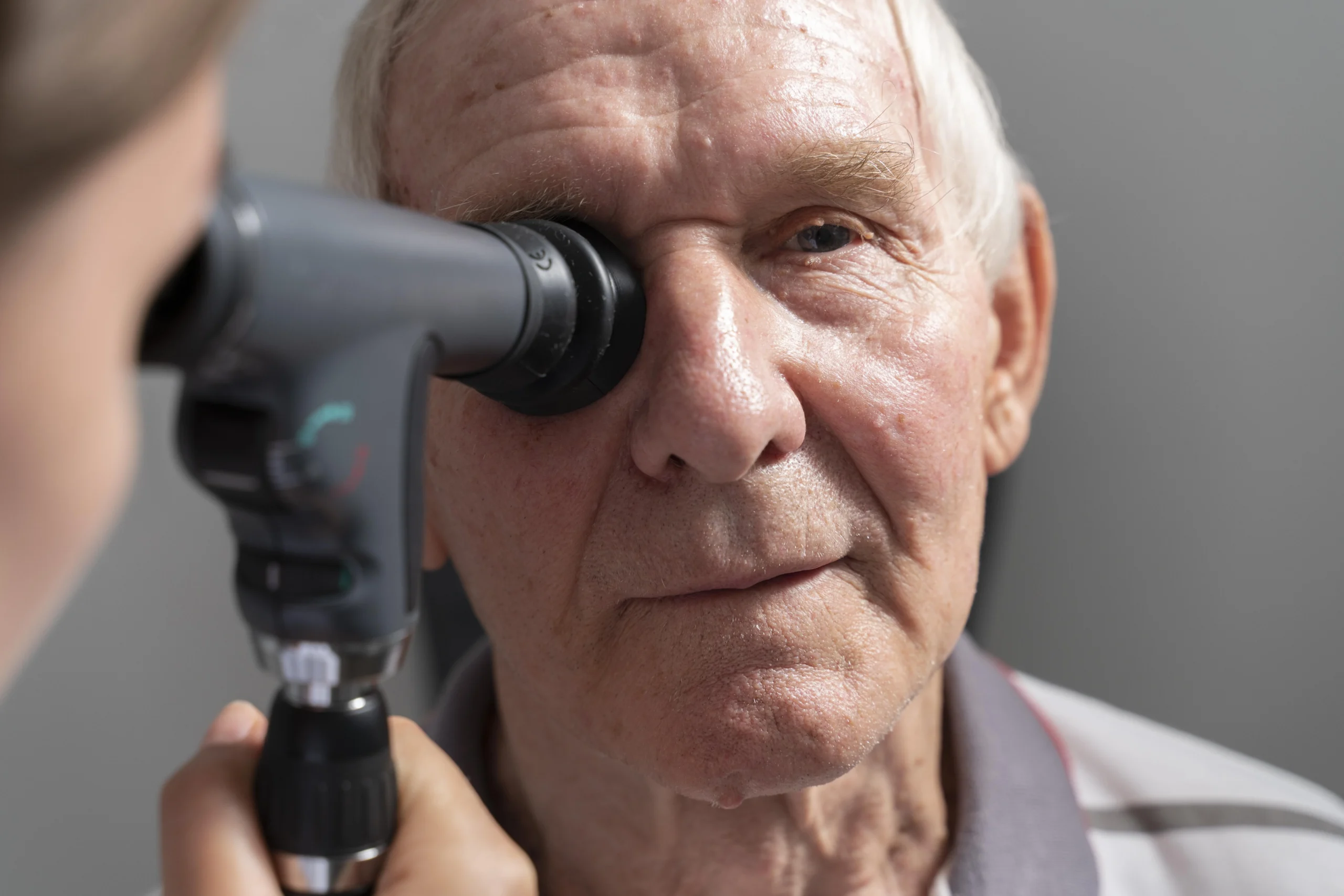
Have you noticed blurred vision, glare while driving at night, or difficulty reading despite using glasses? These symptoms may sometimes be associated with a cataract affecting the back portion of the eye’s natural lens.
A posterior polar cataract is a specific type of cataract that develops near the back surface of the natural lens. It is crucial to identify because the cataract may be closely attached to a thin or weak posterior lens capsule, making cataract surgery more challenging than routine cases.
Although not every posterior polar cataract requires immediate surgery, proper diagnosis and timely treatment planning are essential to protect vision and reduce surgical risks.
In this complete guide, we explain the symptoms, causes, diagnosis, treatment options, surgical complications, and recovery associated with posterior polar cataracts.
What Is Posterior Polar Cataract?
A posterior polar cataract is a clouding on the back surface of the lens, right at its centre (the “pole”). It usually appears as a small, sharply outlined white disc, sometimes surrounded by rings or spokes, and it is often present from childhood.
It matters more than its size suggests. Because it sits directly in the visual axis, even a small opacity can scatter light and cause glare, blurred vision, and poor reading clarity. Symptoms often get worse in bright light, when the pupil narrows and light is forced through the centre of the lens.
The other reason it needs attention is the lens capsule. The thin membrane behind the opacity can be unusually weak, which makes this cataract more delicate to operate on than most other types. Timely diagnosis helps your surgeon plan carefully, long before surgery becomes necessary.
What Causes Posterior Polar Cataract?
Posterior polar cataract is usually not caused by lifestyle or ageing alone. Most cases are developmental or inherited.
- Genetic inheritance: Often passed down in families (commonly autosomal dominant), and changes in several lens-related genes have been linked to it
- Developmental origin: Related to remnants of the foetal blood vessel that once supplied the back of the lens
- Bilateral tendency: Both eyes are often affected, though one may be worse
- Slow progression: Many remain small for years and then worsen in adulthood
- Other contributors: Eye injury, inflammation, or steroid use can add other cataract types on top
If a parent, brother, or sister has this cataract, tell your eye doctor, as family members may need screening.
How Is Posterior Polar Cataract Different from Other Cataracts?
Other cataract types are mostly age-related. Posterior polar cataract is often present early and has a specific appearance and surgical risk.
| Feature | Posterior Polar Cataract | Posterior Subcapsular Cataract (PSC) | Nuclear Cataract |
| Appearance | Well-defined round or oval disc, sometimes with rings | Granular, irregular, “breadcrumb” plaque | Central yellow-brown clouding |
| Usual cause | Developmental and genetic | Steroids, diabetes, inflammation, radiation | Ageing |
| Onset | Often early in life | Usually adult | Usually after 50-60 |
| Progression | Often slow, can vary | Often faster | Gradual |
| Capsule weakness | Possible | Not typical | Not typical |
| Surgical risk | Higher | Standard | Standard |
What Are the Common Symptoms of Posterior Polar Cataract?
Symptoms often appear before the cataract looks large, because the opacity sits where light focuses.
| Symptom | What You May Notice |
| Glare | Bright lights, headlights, and sunlight are uncomfortable |
| Blurred vision | Especially in bright light, when the pupil narrows |
| Poor near vision | Reading becomes harder |
| Halos | Rings around lights at night |
| Reduced contrast | Faces and objects look washed out |
| Frequent glasses changes | Prescription changes without lasting improvement |
| Double or ghost images | In one eye (monocular diplopia) |
Vision is often better in dim light, when the pupil widens, and light passes around the opacity.
Can Posterior Polar Cataract Affect Vision?
Yes, and often more than its size suggests. The central location blocks and scatters light as it focuses on the retina.
- Small opacities can still cause noticeable glare and blur
- Bright light worsens symptoms because the pupil narrows
- Night driving and reading are usually affected first
- Progression varies, and some stay stable for years while others worsen faster
How Is Posterior Polar Cataract Diagnosed?
Diagnosis is made during a detailed eye examination, usually after the pupils are dilated. The findings do more than confirm the cataract, because they also help your surgeon judge how fragile the lens capsule may be and plan the surgery.
- Visual acuity and glare testing: Checks how your vision changes in bright and dim lighting, since symptoms are often worse in bright light
- Slit lamp examination: Shows the size, shape, density, and rings of the opacity, which is the key test for diagnosis
- Retro-illumination: Highlights the opacity against the red reflex from the retina and helps show its exact outline
- Other tests: A retinal examination, and sometimes anterior segment imaging or OCT, to check the back of the eye and plan the surgery
- Family history: Helps confirm the inherited pattern, so tell your doctor if a parent, brother, or sister had cataracts at a young age
What Makes Posterior Polar Cataract Surgery Challenging?
The challenge is the back lens capsule, the thin membrane behind the lens. In many posterior polar cataracts, this capsule is very thin, or even has a small defect beneath the opacity.
Why this matters:
- Standard steps, such as injecting fluid behind the nucleus, can stress a weak capsule and cause it to tear
- A tear can allow lens material to fall back into the eye
- The risk of this complication is higher than in routine cataract surgery, and some studies report it in roughly 1 in 4 to 1 in 3 eyes
How experienced surgeons reduce the risk:
- Using gentle fluid techniques instead of forceful hydrodissection
- Keeping a protective layer of lens material until late in the procedure
- Lowering fluid flow and keeping the eye pressure stable
- Using viscoelastic gel to support the capsule
- Planning for a backup lens placement if the capsule is compromised
What Are the Risks and Complications of Posterior Polar Cataract Surgery?
Most patients do well with an experienced surgeon and careful planning, but this cataract carries a higher surgical risk than routine cases. Knowing the risks beforehand lets you make an informed decision and ask the right questions.
- Posterior capsule rupture: The main risk, which can require extra steps during surgery and may affect the choice of lens
- Dropped lens fragments: Rarely, nucleus pieces fall into the back of the eye and need a second procedure by a retina surgeon
- Vitreous loss: Gel from behind the lens may come forward and needs to be cleared during surgery
- Inflammation: Slightly more common after a complicated surgery, and usually controlled with eye drops
- Macular swelling (CMO): Fluid at the centre of the retina can blur central vision after surgery
- Retinal detachment: Rare, but the risk is higher after capsule complications
- Raised eye pressure or infection: Rare, as with any cataract surgery
Choosing an experienced surgeon with complex cataracts, and discussing the risk openly beforehand, matters more here than in routine cases.
What Are the Treatment Options for Posterior Polar Cataract?
Surgery is the only treatment that removes the cataract. No eye drop, supplement, or diet can clear it.
Non-surgical measures (early or mild cases):
- Updated glasses
- Anti-glare lens coatings and sunglasses
- Regular monitoring for progression
Surgery (when vision affects daily life):
- Phacoemulsification with modified technique: The standard approach, adapted to protect the weak capsule
- Femtosecond laser-assisted surgery: Considered by some surgeons in selected cases, though it is not mandatory
- Backup plan: The surgeon prepares for a different lens position if the capsule is not intact
Surgery is usually advised when glare, blur, or reading difficulty interferes with work, driving, or normal daily activities.
What Type of Intraocular Lens Is Suitable?
The right lens depends largely on whether the back capsule stays intact during surgery. Since this cannot be fully known until the operation, your surgeon will usually plan a main option and a backup.
- Capsule intact: A standard in-the-bag foldable IOL is typically placed, and a toric lens may be considered if you have astigmatism
- Capsule torn: A different position, such as in front of the capsule (sulcus), with a suitable lens design, may be used
- Premium multifocal or trifocal lenses: Many surgeons avoid promising these before surgery, because the final lens position cannot be guaranteed
- Monofocal lens: Often the most predictable choice in these eyes, with clear distance vision and glasses for near work
Your surgeon will confirm the lens plan after examining your eye and discuss backup options with you in advance.
What Is the Recovery Time After Surgery?
If surgery is uncomplicated, recovery is similar to other cataract surgeries.
- First 1-3 days: Mild watering, light sensitivity, and blurred vision are normal
- First week: Vision improves steadily, and light activities resume
- Weeks 2-4: Eye drops continue, and heavy lifting and swimming are avoided
- 4-6 weeks: Vision stabilises, and glasses are prescribed if needed
If the capsule was disturbed, healing may take longer, and follow-up visits are more frequent. Never stop your drops early.
When Should You Consult an Eye Specialist?
Many people live with glare and blurred vision for years before getting checked. A timely assessment helps you plan surgery at the right time, before the cataract affects your work, driving, or independence.
See an ophthalmologist if you notice:
- Glare or halos that are getting worse
- Blurred vision that glasses do not fix
- Trouble reading or night driving
- A family history of cataracts at a young age
Seek urgent care for:
- Sudden vision loss
- Eye pain, redness, or flashes and floaters
- Worsening vision after cataract surgery
Frequently Asked Questions
1. What is the success rate of posterior polar cataract surgery?
Most patients achieve good vision after surgery. The main difference from routine cataract surgery is a higher chance of capsule complications, which is why surgeon experience and planning matter. Outcomes depend on the eye’s overall health.
2. How to differentiate posterior polar cataract from posterior subcapsular cataract?
Posterior polar cataract is a well-defined round or oval disc, often inherited and present early. PSC is a granular, irregular plaque, usually acquired from steroids, diabetes, or inflammation, and often progresses faster. A slit lamp examination tells them apart.
3. Is posterior polar cataract rare?
It is uncommon, estimated at a few percent of cataracts, and more likely to run in families. Many eye surgeons see it only occasionally.
4. What is the most serious type of cataract?
Hypermature cataracts are the most serious because of glaucoma and inflammation risks. Posterior polar cataract is the one that is considered most challenging to operate on because of the weak capsule.
5. What are the potential complications of posterior polar cataract?
The main ones are posterior capsule rupture, vitreous loss, dropped lens fragments, inflammation, macular swelling, and, rarely, retinal detachment. Careful technique lowers these risks.
6. Which type of cataract surgery is better?
Phacoemulsification is the standard, with modifications for posterior polar cataract. Laser-assisted surgery may suit selected cases, but surgeon experience matters more than the method.
7. What are the different grades of posterior polar cataract?
There is no single universal scale. Surgeons usually describe it by size, density, presence of rings or spokes, and whether the capsule looks weak. Larger or ringed opacities usually signal higher surgical caution.
8. Is a posterior polar cataract curable?
Yes. Surgery removes the cataract and replaces the lens, restoring vision in most patients. No medicine or eye drop can cure it.
9. What to eat to stop cataracts?
Leafy greens, citrus fruits, nuts, seeds, and fish support eye health. They may slow other cataract types but cannot reverse or stop an inherited posterior polar cataract.
10. How can I slow down my cataracts naturally?
Wear UV-protective sunglasses, avoid smoking, control diabetes and blood pressure, eat a balanced diet, and avoid unsupervised steroids. These help general lens health, but an inherited cataract may still progress.
Conclusion
Posterior polar cataract is a distinct and often inherited type of cataract. It can reduce vision even when small, and cataract surgery needs extra care because of the fragile back capsule. With careful planning, the right technique, and an experienced surgeon, most patients regain clear, comfortable vision.
Dr. Arushi Garg, one of the most trusted eye doctors in Noida, provides detailed cataract evaluation and surgical planning at AG Vision & CoDE Centre, including careful assessment of complex cataracts and a clear discussion of risks and lens options before surgery.